A Media Memoir of Faith, Fracture, and the Fight for Truth
Prelude: The Landscape
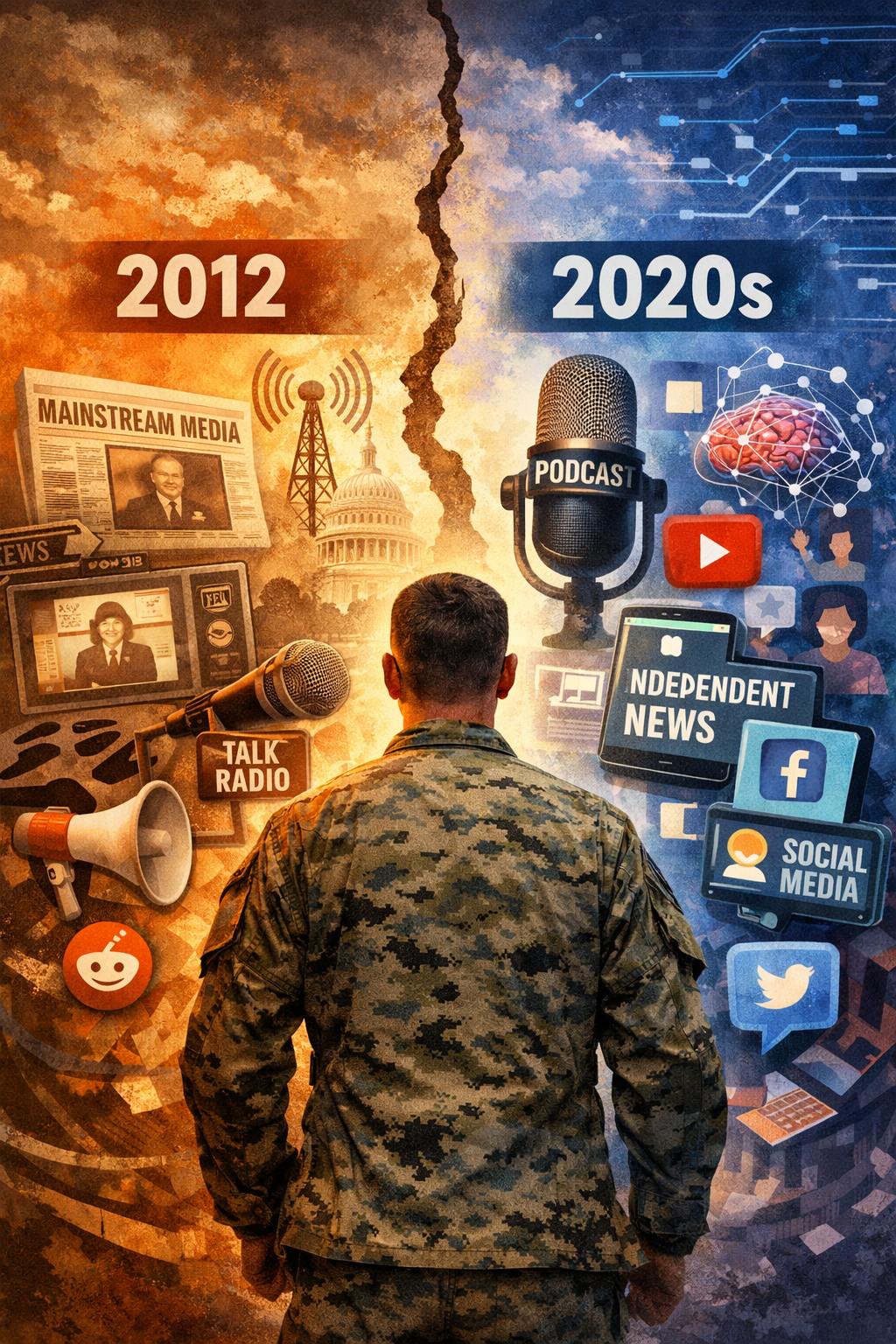
When I look back at the state of media since separating from the military in 2012, I see patterns of organizations and voices reshaping the landscape. I moved to New Mexico from Fort Bliss in El Paso, Texas, and fell into an early morning routine with NBC’s Today show.
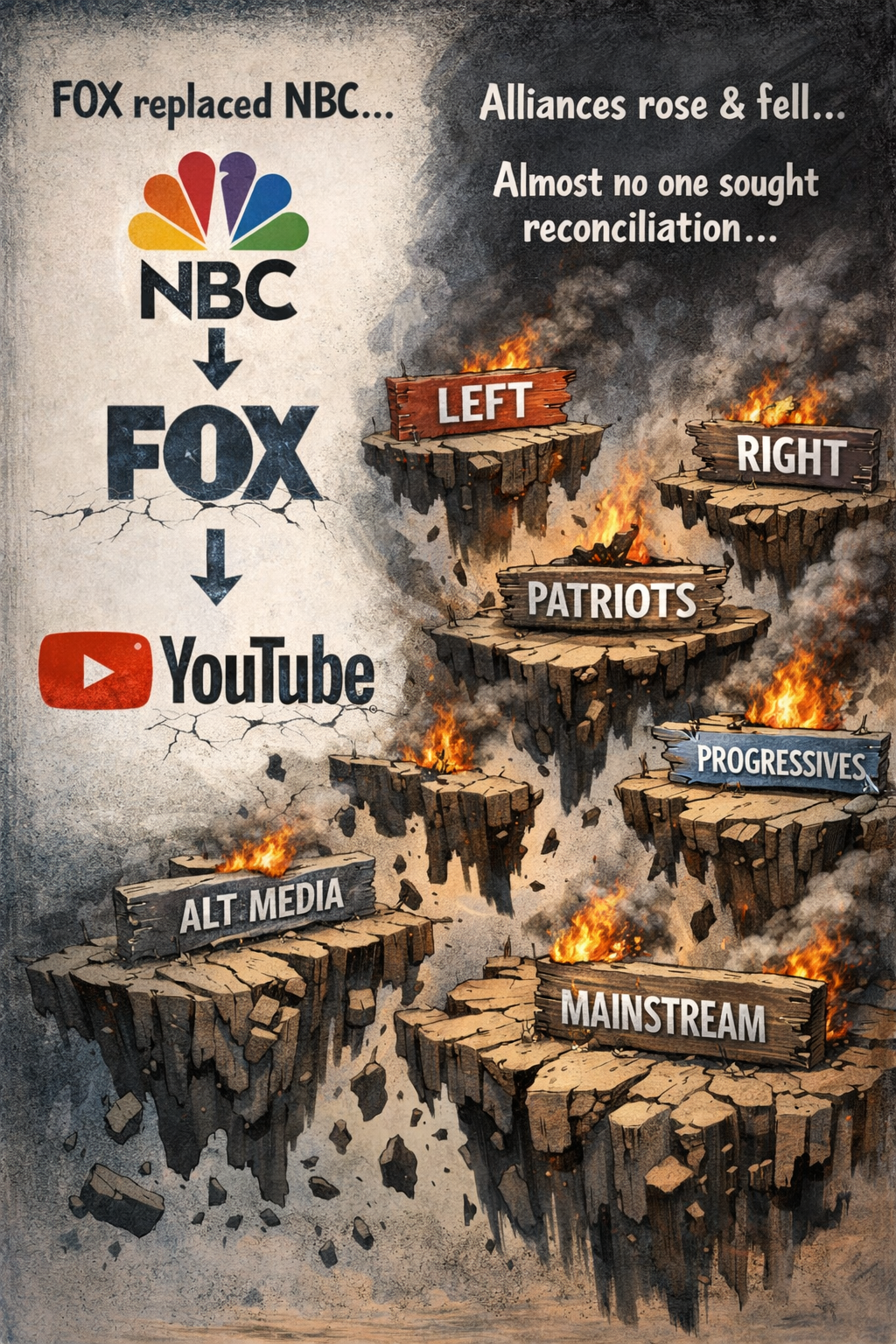
That was my soft landing into the civilian media world. FOX would eventually replace NBC, and YouTube would replace FOX as the place where I could hear the most independent voices. Over time, I watched alliances rise and fall, with almost no one seeking reconciliation.
Scott Adams gave me the tools to recognize persuasion tactics and perception through Win Bigly and Coffee with Scott Adams. Watching his health decline, and then his passing, reminded me recently how important it is to anchor one’s life in Christ, in Truth itself.
Charlie Kirk built TPUSA into a powerhouse, showing how the Fruit of the Spirit could be applied to American values in the political youth landscape. His assassination in September 2025 revealed fractures that had been festering for decades, worsened by the October 7th attack in Israel and its aftermath.
Candace Owens went from “Red Pill Black” to PragerU to TPUSA to BLEXIT, then was hired and eventually fired from the Daily Wire. An antisemitism debate that never happened over the statement “Christ is King,” during the Resurrection season, revealed a deeper fracture. Not one to stay knocked down, her solo run has proved undeniable.
Ben Shapiro left Breitbart and cofounded the Daily Wire with Jeremy Boreing. For years, he embodied thoughtful analysis with his Sunday Special interviews and conversations with the Internet Dark Web. But his gatekeeping, from 18‑year‑old Nick Fuentes to post‑FOX Tucker Carlson, showed me the limits of corporate conservatism.
Dave Rubin’s Rubin Report gave me community and long‑form conversation leading into the pandemic. From his red‑pill moment with Larry Elder to being inspired to create Locals as an alternative to Patreon, he eventually moved from California to Florida, selling Locals to Rumble. Yet over time, his platform mirrored the same insulation and ad hominem he once critiqued.
Greg Gutfeld dominated FOX after O’Reilly, Megyn Kelly, and Tucker were gone. He proved humor could carry late night, giving Kat Timpf and Tyrus a platform to grow alongside other comedians and internet‑native guests.
Dave Smith’s debates, from Douglas Murray on Joe Rogan to Josh Hammer on stage with Charlie Kirk, brought clarity to the divisions in Trump’s second‑term foreign policy.
Donald Trump was undoubtedly the catalyst. His rise in 2015–2016, his actions in 2020, and his reelection in 2024 forced every outlet, creator, and institution, to assess, evaluate, and reveal what they really were: activist, entertainer, propagandizer, lobbyist, resistance actor, or independent evaluator.
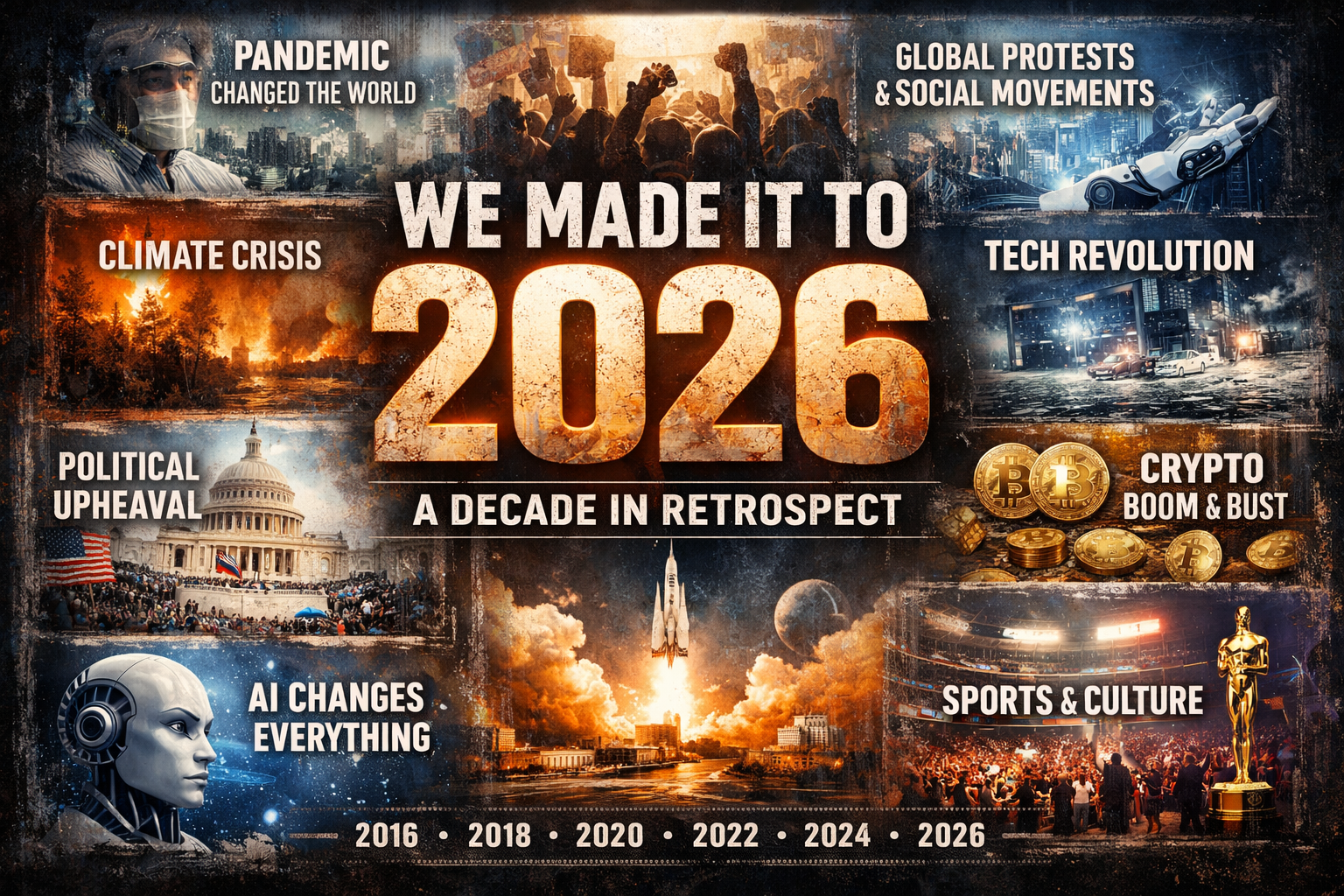
This series isn’t just about media history. It’s about how we lived through the collapse of trust in mainstream media, the rise of creators as arbiters of free speech, and the cancellation reversal in online free speech that exposed the fractures that defined America’s information ecosystems. I didn’t yet understand how deeply these shifts would shape my own life. This is a story of how we got to 2026, told through a retrospective that shaped, reshaped, and sometimes broke the last decade.
 Quinn's Next Step