by John-Quinn Mulquin Jr.
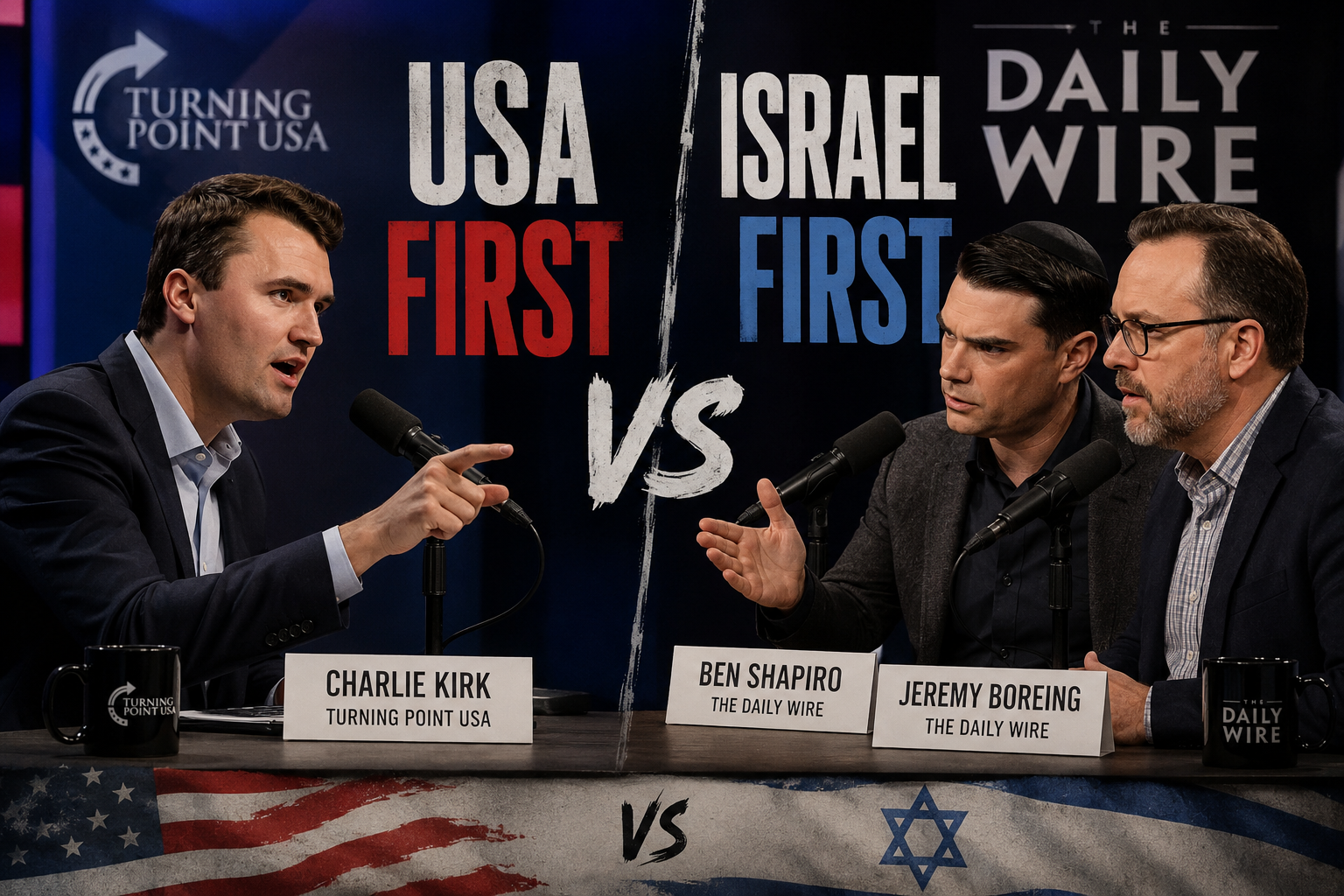
The Daily Wire announced mass layoffs last week. Ben Shapiro’s YouTube channel has shed somewhere between a third and nearly all of its audience since 2023, depending on whose numbers you trust and what baseline you use. The company that once dominated conservative digital media is restructuring, bleeding staff, and drawing fire from former allies and mainstream outlets alike.
I watched The Daily Wire from its rise to this moment. I wrote about it. And I have a perspective that isn’t available to media critics who were never inside the audience they’re now eulogizing.
Where It Started
The memoir documents an era when The Daily Wire represented something genuinely new. Ben Shapiro had left Breitbart and built something that felt more rigorous than the tabloid right, more honest than the institutional press.
The Daily Wire was emerging as a powerhouse from Los Angeles. Ben Shapiro left Breitbart after he cofounded The Daily Wire with Jeremy Boreing in 2015. He embodied thoughtful analysis with his Sunday Special interviews and conversations with the Intellectual Dark Web.
That’s an accurate description of what it felt like from the outside at the time. The Sunday Special was appointment viewing for my early morning routine. Shapiro was treating ideas seriously hearing Christian perspectives. The platform was building something.
And then the building started outrunning the foundation.
The Break That Mattered Most
The Daily Wire’s trajectory changed visibly when Candace Owens left in 2024. The memoir captures the aftermath:
Candace Owens had taken her viewers from The Daily Wire, continuing to ask questions and reviewing books forbidden by mainstream accepted narratives. Brett Cooper later followed Owens’ exit as they tried to replace her on The Comments Section with her former producer and maid of honor. A mistake that would cost the channel a large drop in viewership and trust.
That last sentence is the tell. The Daily Wire’s response to Owens’ departure wasn’t to acknowledge what had driven her audience — questions the platform had decided were too costly to ask — but to find a replacement. It didn’t work, because audiences aren’t interchangeable and trust isn’t transferable by personnel swap.
A 34% viewership drop from Shapiro’s channel between April 2025 and April 2026 is real, whatever the baseline debates. A company-wide restructuring with confirmed layoffs is real. The audience that built The Daily Wire didn’t disappear — it redistributed to voices willing to go further than the institution allowed.
What Corporate Conservatism Actually Costs
By early 2026 the memoir had reached its diagnosis:
Corporate conservatism had failed its audience.
That’s not a hot take. It’s an observation earned across years of watching platforms make institutional choices — about which advertisers to protect, which debates to avoid, which hosts to silence — and then wonder why their audiences concluded the institution mattered more than the truth.
The Daily Wire’s early credibility came from appearing to operate outside that logic. Shapiro built a brand on facts not caring about your feelings. That posture works until the facts become inconvenient for the brand. Then the question is whether you follow the facts or protect the brand. The audience noticed the answer with three letters: NDA.
The Deeper Lesson — For Me
The memoir isn’t a media autopsy. It’s a personal reckoning. But I watched The Daily Wire closely because I was building something of my own — Quinn’s Next Step, the memoir, the platform — and I needed to understand the failure modes.
What I saw in The Daily Wire’s decline was a cautionary tale about building an audience around a personality’s certainty rather than a community’s honest inquiry. Shapiro’s greatest asset — the rapid-fire, debate-me confidence — became the ceiling. It attracted people who wanted to be told they were right. It repelled people who wanted to be helped to think. Shapiro simply stopped debating in good faith.
I came home from Iraq with too many questions to trust anyone who claimed all the answers. The institutions that earned my long-term attention were the ones willing to say: I don’t know yet. Let’s find out together.
The Daily Wire was never that. It was very good at what it was. And what it was had a shelf life.
What Lasts
The memoir ends with a question I’m still living: what does it look like to build something that doesn’t depend on institutional protection, algorithmic favor, or a personality’s ability to stay ahead of the story?
Charlie Kirk pointed toward an answer. Patrick Bet-David called him a combination of Reverend Billy Graham and Rush Limbaugh — not because he was a celebrity, but because he understood that the work was bigger than the platform.
The Daily Wire built a platform. Kirk built a mission. That difference is now visible in what survives as TPUSA joined the decline after his death.
I wrote a memoir about a veteran trying to figure out which one he was building. The answer, I believe, is in the book.
Read What Was Meant for Harm, available now on Amazon: https://a.co/d/05juIdfJ
Kindle, paperback, and hardcover.
John-Quinn Mulquin Jr. is a U.S. Army veteran, author, and founder of Quinn’s Next Step. He lives in Texas with his wife and son.

