Right Back Where I Have Always Been

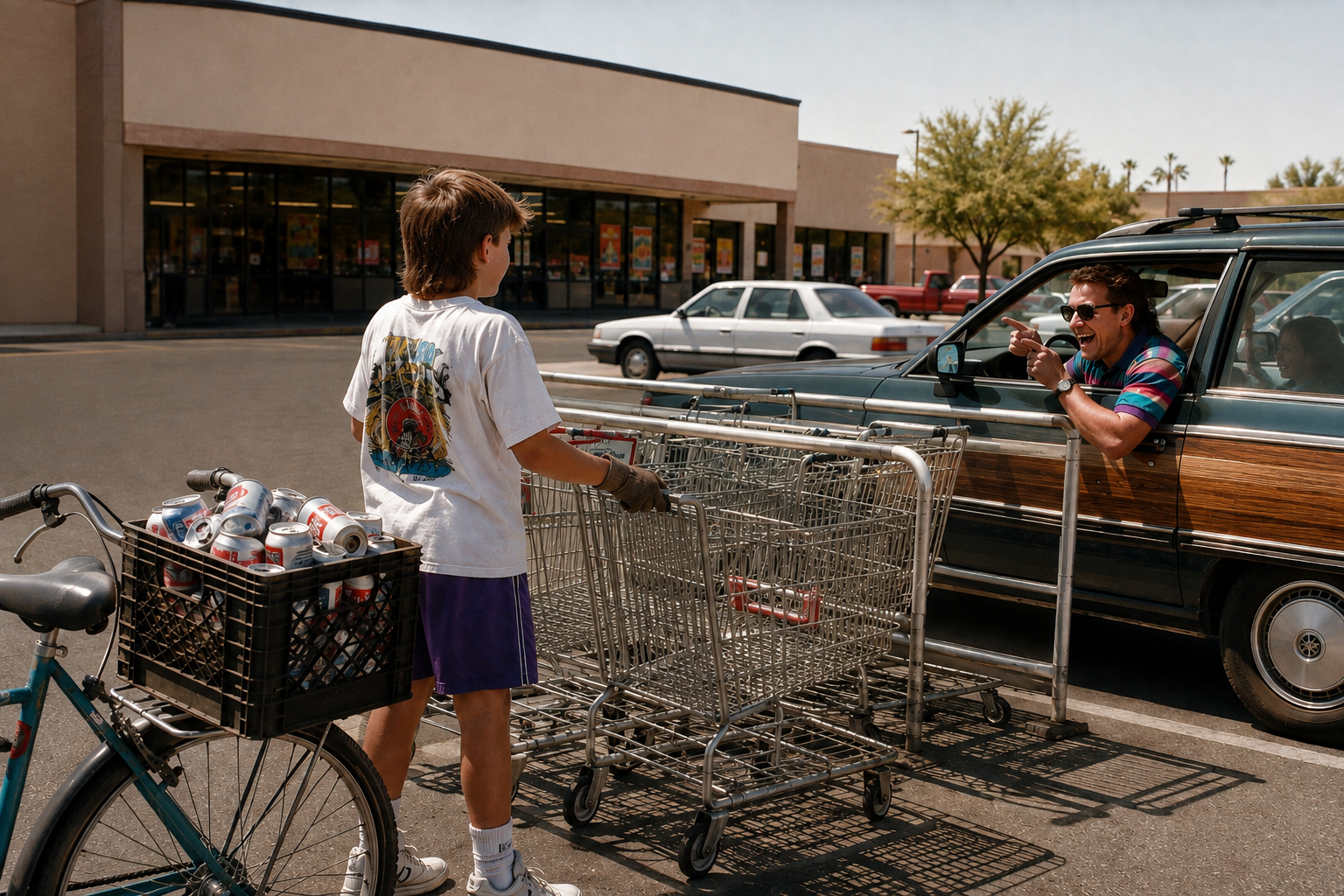
In 1992, at twelve years old, I would ride my bike around my west Phoenix neighborhood, collecting aluminum cans to recycle for some spending cash. After one particular drop-off, I had the bright idea that if I went across the street to the grocery store and spent a couple hours bringing in shopping carts, they might want to pay me or give me a thank you gift from the store. I didn’t get but ten minutes into my cart wrangling when a family childhood friend showed up and laughed at me. I got on my bike and went home.

My parents have been referenced as workaholics. Living with my mom and stepfather, my sisters and I were latchkey kids. In February 1993, I got the opportunity to interview the head coach of the Phoenix Suns, Paul Westphal, meeting NBA star Charles Barkley afterwards. My father and stepmother each worked overtime jobs as well, although I didn’t live with them until the summer of 1993. My first job didn’t come until 1995, where I was allowed to work with my stepbrother and stepmother at a furniture refurbishing warehouse. I got a school year job at a local movie theater in 1997, followed by a grocery store and Taco Bell stretch.

During my senior year, I produced the high school morning show with a Friday variety show where I would film places like Planet Hollywood and Hard Rock Café. The latter opened me up to an interview with blues guitarist Jonny Lang. After graduation in 1998, I spent my last summer at the furniture warehouse before going to Ball State University in Muncie, Indiana in the fall. I had one, short-lived job at Ball State before moving back to Arizona at the end of the semester.

Back to Taco Bell to start off 1999. I moved back in with my dad for three months before moving in with my sister across town. My Taco Bell manager transferred me to a local store which I worked at until getting hired at the Metrocenter Mall Best Buy. Nine months later in December, I was looking to move in with a couple high school friends, when I was let go from Best Buy.

I moved in with my friends and began a new job search. A TGI Friday’s in walking distance from our apartment was opening and while I had no experience, they didn’t have enough applicants, so they gave me a shot. Thirteen stores in six states over the course of nine years, it worked until it didn’t. I worked a night audit job in 2000 at a local hotel for a few months until the schedule became too much. I was subsequently rehired by Best Buy in 2002 as my firing in 1999 was deemed by the manager as a miscommunication.

Advancement at either of these places became unattainable. The TGI Friday’s franchise Main Street Restaurant Group was acquired by Briad Main Street, LLC in 2006, the start of the end. Movies like Waiting and Office Space did not help the downfall that resulted in abrupt closings in April 2013. Best Buy bounced me between departments and roles, some in leadership, before I was ultimately unable to advance.

I attempted to change careers a couple times. I had married a coworker from Best Buy and received my first mortgage in 2005 going into the 2007 housing collapse. I worked long hours at the Shamrock Food distribution warehouse in Phoenix before attempting to work in life insurance for American Income Life Insurance (AIL). From hourly pay to incentive pay to full commission pay seemed like a good way to go to prevent advancement ceilings. Neither was good for my home life, and we separated while the courts took over.

A newborn son in 2008 followed by a divorce destroyed me. I moved into a small townhouse as the house went into default. My bills got higher, and I could not keep up. I worked three jobs, seven days a week. Sunday and Monday nights I bartended at a local pub. I was a food server at Saddle Ranch Chop House Tuesday through Saturday evenings and a Best Buy merchandiser in the mornings as scheduled. I fell behind on child support with no visitation rights beyond supervision with supervisors that weren’t available with my schedule.

I was ready to commit suicide. But I knew I could not and would not.

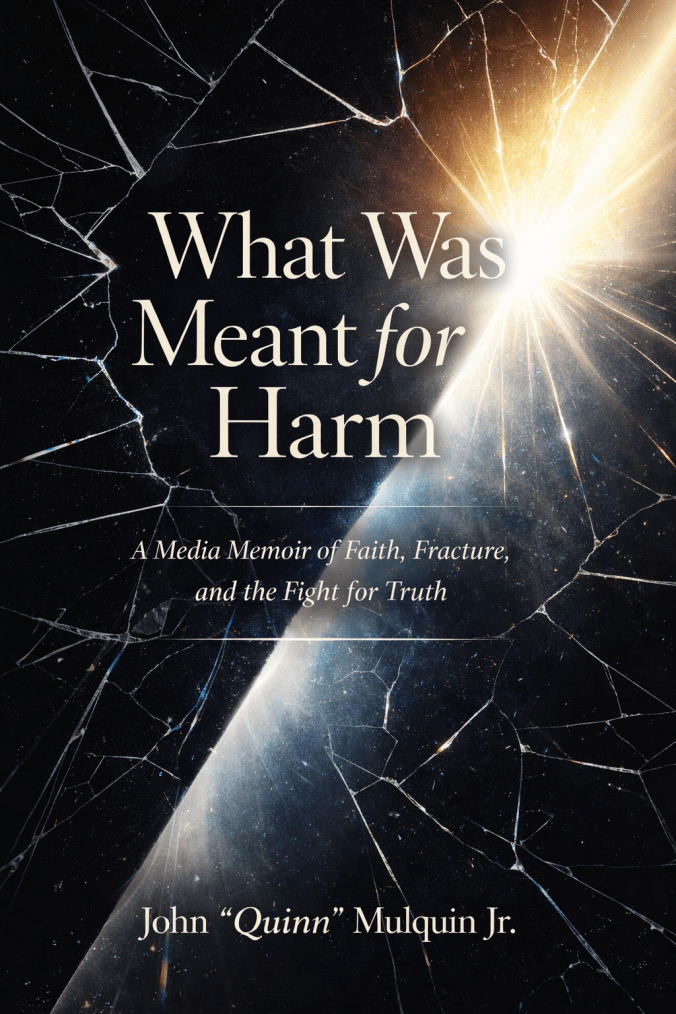
If I died in the military, I thought, then at least my son could get the payout. As mentioned in my media memoir What Was Meant for Harm, I prayed outside of the MEPS station in Phoenix before signing the contract.

If I was going to work 24/7, I might as well join the Army at 29 years old. If I die, my son has money. If I live, let God use the rest of my life for His purposes.

I was stationed in 2009 at Fort Bliss in El Paso, Texas and immediately deployed to the middle east. After returning from deployment to Iraq in 2010, I met my wife, married in February 2011, with our son being born later in October.

My military service from 2009–2012 ended four months early with a downsizing involuntary separation prior to my contract expiration date.

I set myself up to use the Post 9/11 GI Bill at the University of New Mexico beginning in 2013, moving into student family housing the week of Christmas 2012. I returned to a Best Buy in Albuquerque, New Mexico. I was laterally promoted from Merchandiser to Project Team Member, with twice the responsibilities and stagnant pay at $10.50/hour. Best Buy worked with my school schedule, but as summer 2013 rolled in, I saw I could make more working with my stepbrother, who had begun his own office furniture installation business in Albuquerque, so I called my Best Buy supervisor and quit once and for all.

The Veteran’s Affairs Administration diagnosed me with PTSD, right hip bursitis, and sleep apnea, leading to disability compensation beyond the GI Bill benefits. By fall 2013, I was prepped to focus on school. It was time to build something of my own.

At 33 years old, I didn’t necessarily go to school for the education, but I was interested and learned a lot in the Film & Digital Media courses I took. I thought I might meet the right people, create an entity with fellow students, or find work in the local film industry.

By the end of 2013, I had gained somewhere around fifty pounds from the beer drinking I had engaged with since leaving the military. I looked into the New Mexico Medical Cannabis program and made the switch to get off of the Prozac and Zoloft from the VA. In about three months, I had lost the fifty pounds and reduced beer drinking by a large percent. I was no longer in a pharmaceutical haze. I began having hope again for the future. The end of 2013 had us moving into a rental home from student family housing. Quite the step up I might add.

Three classmates and I began looking into making a movie. I began looking at the legal LLC structure for movies and began drafting potential contracts. One of the members did not like the forward-looking nature of the entity I had drafted, and I was pushed out of the group. They wanted a hobby, not a business.

Taking what I had learned from my first year and a half in school, I registered my new business entity, Next Step Media Productions, LLC (NSMP), in April 2014. A City of Albuquerque grant of $5000 and a loan helped me get the equipment to get started. By fall, I had been hired by Green World Health Net to be their Warehouse, Volunteer, Donation, and Social Media Manager, paid through a work-study program for the school year.

At this point I had always had a job. If I wasn’t working the nonprofit, I was working on building Next Step Media as an upstart. If I wasn’t doing that, I was taking care of my schoolwork or bouncing between appointments at the VA. My wife could see that I, too, had become a workaholic. We had a conversation acknowledging that I needed to ‘play’ more. I needed to work every day to earn that play, or so I thought.

Summer 2015 came, work-study ended, and I was back installing furniture, still going to VA appointments and seeing what I could do to build my own business. August was my first attempted paid project that resulted in a failed product and refund to the client. Disappointed, I began to redefine my services. In the same month, I applied for a mortgage-free home through the Military Warriors Support Foundation (MWSF).

I took a Boots to Business course through the University of Syracuse at Kirtland Air Force Base in the fall 2015 while also applying for Veteran’s Vocational Rehabilitation and Employment (VR&E) benefits. I refined my business plan, met other veterans seeking self-employment or business start-ups, set myself up for an internship with the New Mexico Film office and an independent work-study through GI Bill courses at UNM for the spring 2016.

It turned out that my MWSF mortgage-free home application had been lost in the shuffle and was found in December, right before the Gildan New Mexico Bowl, where we were given a symbolic foam key gifting our family with a house outside Belen, New Mexico. The deed was not transferred until we had completed a three-year financial readiness program. A story for another time.

I was soon let go from my spring semester NM Film office internship for asking too many questions, let’s say. I shifted the internship into creating a promotional video for my stepbrother’s furniture installation company, also helping them with their website. I continued building NSMP through the independent work-study, reaching out to the Belen Chamber of Commerce with an introduction. My application for VR&E Self-Employment benefits was denied and I appealed the decision.

I found a mentor in Belen that contracted me to create promotional videos for the Belen Mainstreet Partnership, New Mexico True campaign on the Rail Runner commuter trains from Belen to Sante Fe, and a contract with Concerned Veterans for America (CVA) leading into the 2016 elections. The season became a proving ground of what I was capable of producing while I continued courses at UNM. I found a handful of other individuals to contract me to film their events, video applications and performances. Work I am still proud of, even if the quality wasn’t what I would later produce. Some of those videos are still available on my YouTube channel.

The CVA contract ended shortly after Donald J. Trump was elected President of the United States in November 2016.

I reached out to staffing agencies and joined a background acting agency. I got to be on the sets of Night Shift (Season 4, Episode 1), Midnight Texas, Get Shorty, The Girlfriend Experience, and an unaired CBS drama pilot, Mission Control. While I enjoyed the experience, I found the hours and pay to be unfulfilling. Waiting around to be called to set gave me time to consider what I had rather be doing. I removed myself from the roster.

I graduated in May 2017 and returned to office furniture installation work with my stepbrother. I was hired by one of his employees to film their wedding in September, giving me the opportunity to work in my field, even if only for the price of a hotel room for the night. I had always looked up to my stepbrother, encouraged by his strong individualism, family, faith, and independent work ethic, although I began to realize that I was seen as the messed up little brother and not an equally valued member of the business—or family.

It made sense as I was a seasonal employee, at best, and my stepbrother had no interest in looking at my media skillset for business integration into his. It seemed this season was Godsent, as the attachment I had to my older stepbrother had become unhealthy for me in finding my own way and God-given purposes. I attempted to confront and reconcile the differences I had with my stepbrother, only to find out that I was the problem. I was somewhere I did not fit in or belong. Message received.

Chapter 3 of my media memoir, What Was Meant for Harm, speeds through 2017 and 2018, as the Independent Shift. The talented Ms. Van Ann Moore hired me to film a couple of her performances, my 20-year reunion asked me to put together a reel from our high school days, and my mentor from the chamber had one more video for me to make that would become my most watched video to date for the Sugar Bowl Bowling Alley in Belen, NM. I’d like to say the video was great, but the reality is that it became the last testament to the building itself, as it burned down two years later in the summer of 2020.

I ended up making more money at a casino in 2018 than I did trying to find work in between VA appointments. They gave veterans free chips every week, so I would show up, play the freebies, and leave. Sometimes with zero, sometimes with $40. After a $5000 win of tic-tac-toe, I stopped going to the casino altogether having perceived myself as winning more than I was losing.

I started making YouTube videos myself and created Quinn’s Next Step as a way of sharing insights and ideas for public debate and discussion, from individual responsibility to collaborative subjugation, from the Word of God to reading the first chapter of Ecclesiastes over a slide show.

2019 became a reset. No YouTube videos. No contracts. My wife and I were unable to find the medical care we needed, and safety concerns were increasing in our small New Mexico town. God’s timing, despite the tough year, couldn’t have been better. We moved to the Texas Hill Country by October, after a two-week summer trip around the Canyon Lake area between Austin and San Antonio.

We were homeschooling our son and I was sending out introduction emails to find work nearby. The COVID-19 pandemic emerged nationwide in March 2020, and we were safe and ready. I picked up a merchandising job that lasted a few months before I quit. My supervisor let me know when I resigned that he thought I was overqualified for the position, but appreciated the work I had done. In August, the Studios at Fischer picked me up as an A/V technician for livestream concerts they were producing while touring had stopped due to lockdowns.

I expanded my contractor base in 2021, picking up camera operator, video switching, PowerPoint, and video playback operator gigs in Austin and San Antonio, as Governor Greg Abbott opened Texas back up for business. Hotels, conference centers, corporate meetings, concerts, and brand activations gave me somewhere to show up and deliver. At home, I helped my son create his own gaming YouTube channel going into 2022. His natural on-air talent was inspiring.

Contractors kept me busy, increasing my coverage and experience during peak live event seasons, although I felt another tug to redirect myself, again. What was I to do when there were no gigs to work? What happened when I had a higher paying contract come in when I already committed to a low day, low pay contract? I respectfully cancelled the lower contract, offering recommendations for replacement, without burning the contractor. Everyone was looking out for themselves, myself included, and that became okay.

I felt a pull in 2023 to re-engage with Quinn’s Next Step more intentionally. Could I figure out how to create content myself? Website, YouTube, Rumble, Locals, Twitter (now X), Facebook, and LinkedIn became my distribution.

Food videos, DIY videos, video games, and news became the genres I wanted to create. A motion-activated game camera picked up wildlife migrating through my property that I could share with others. Not a niche channel, I had created a variety show from scratch, recording what I wanted, when I wanted. A series of shorts attempting to remove a field mouse from my backyard became a fan favorite. A cameo on a short-lived podcast called People of the Internet encouraged me to keep going.

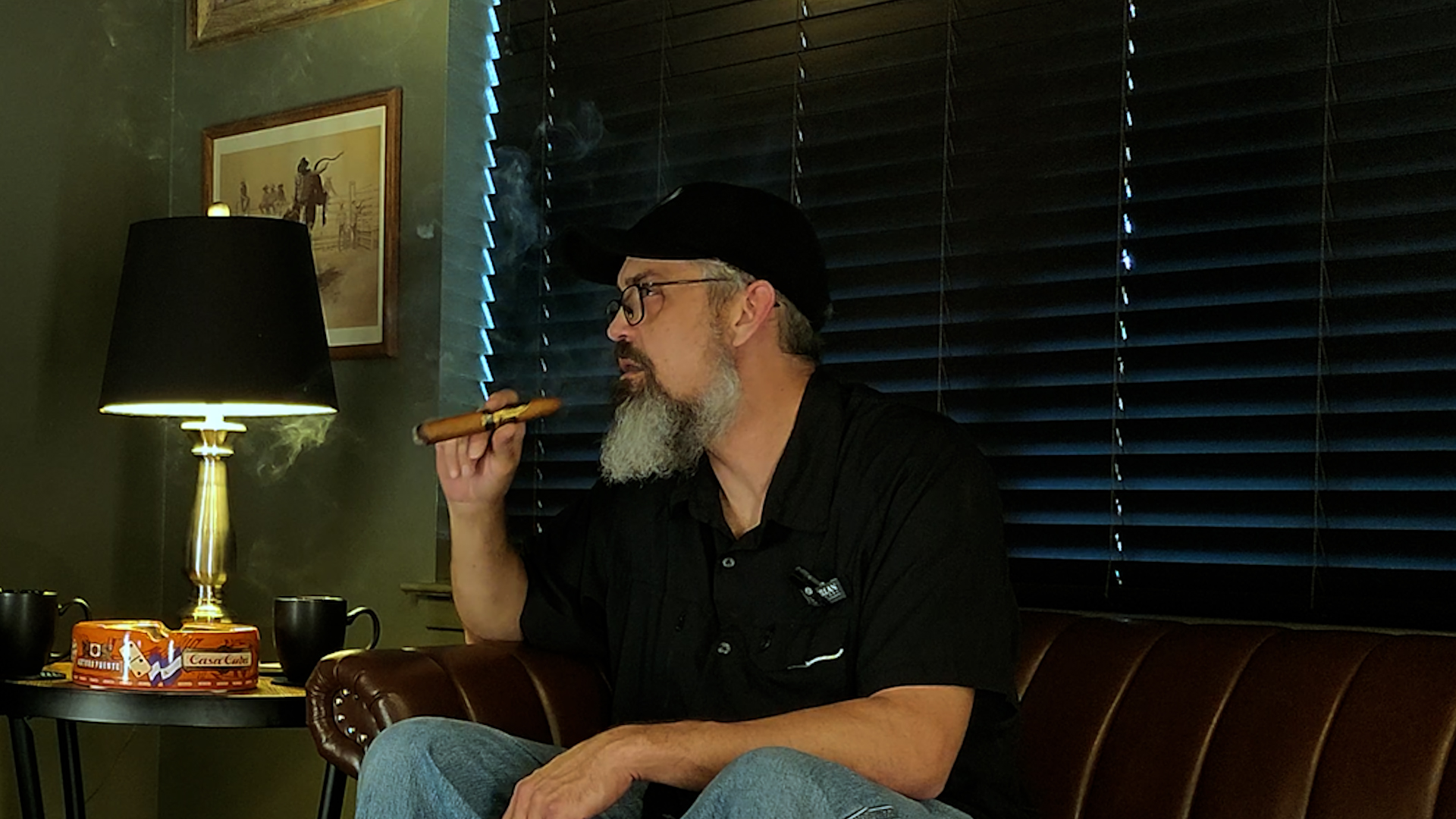
I ended the year going into spring 2024 creating a series of videos reviewing the pros and cons of different job and career avenues I took since my first job at Taco Bell. Similarly to this post, I was looking at where I came from, why I quit jobs before they could quit me, leading me to independent contracting. When I wasn’t on contract, I was creating videos for my YouTube channel. I was led to work with people, not for people. I just hadn’t found the people locally to work with. I looked up cigar lounges in the Hill Country to produce a new series.  Free advertising for them as I was building the proof of concept, with over 3,800 views between the four lounges to finish up the spring season.

In Belen, New Mexico, I had introduced myself to the local chamber of commerce that had opened me up to multiple contracts, so I decided to attempt the same thing with the Wimberley Chamber of Commerce during the summer months. Introductions, presentations, proposals and quotes resulted without fruit. I ended the relationship with the chamber, taking a couple friendships with me, having spent through startup funds participating in chamber activities. 

I entered a dry spell in contractor gigs in 2025 with the closing of the Austin Conference Center, a change in the labor coordinator with one of the contractors, and less available work at the Studios at Fischer. I attempted to go back to regular employment, sending resumes out to a dozen or so different companies from San Antonio to Austin. I could make it through multiple interviews, video submissions, and final in-person interviews before ultimately not being chosen for the role.

My video output on YouTube had decreased as I attempted to bridge gigs, resume submissions, and in-person outreach. I began to build a roof for my patio. I reached out to a local construction company to see if they wanted to fix my mistakes on camera with an in-kind way of free video and social media advertising for them. It turned out that they were too busy to participate.

In an unexpected twist, I tore down what I had built on the patio and began editing the footage the day TPUSA’s CEO, Charlie Kirk, was assassinated on September 10, 2025. The parallel of two unrelated things being destroyed at the same time caught my attention, renewing my faith in the process. A carpenter two thousand years ago was murdered for speaking truth to governmental and religious powers of his day. Is that what I had just witnessed? Was Charlie Kirk the latest Christian martyr in a history full of them?

As my faith was being renewed, my identity in work and conversation became less of a concern. I ended therapy at the VA. I stopped meeting up with a chamber friend. I stopped volunteering with the church youth group. My son had developed gastrointestinal issues that affected him for a month. I applied for a substitute teacher role I would later have to decline as the state’s Medicaid was dropping my wife and son.

I took my family on a two-week vacation to Florida to see old friends, family we hadn’t seen in over a decade, and a successful three nights at Legoland. Upon returning the second week of November, we confirmed our son’s health improvements with labs, CT, primary-care doctor, and gastroenterologist. The following week would reveal that our German Shepherd of ten years had a splenic mass rupture. She passed away on December 6, and a deep mourning ensued. I finished the year with a couple brand activations at an outdoor mall, a welcome distraction in my grief.

2026 would bring an end to sporadic contracting in Austin or San Antonio for my two remaining contractors. The Studios at Fischer were looking to sell.

Before I knew it, God had led my wife and I to publish my media memoir What Was Meant for Harm on May 8. I thought I was writing about the media landscape since I exited the military. It soon became a personal story of loss, faith, and fracture, and how God uses moments and seasons to reveal something greater. With no marketing or advertising budget, my wife made video shorts leading up to its release for social media channels.

I wrote a week of blogs promoting the book and giving further insight. I then turned my focus to write about why I feel the way I do about churches with a couple childhood memories. I continued to follow the Charlie Kirk story, when June brought two more stories to the forefront: a case involving allegedly stolen LEGO by the corporate Bricks and Minifigs reseller, and the cancellation of a new Stargate series. I saw authorities and institutions corrupting the values they said they stood for, and breaking the trust of the public, at every scale.

Institutional work looks bleak, and yet I have returned to LinkedIn and Indeed to open myself up to the possibility there is a purpose and position right for me within an institutional community. Working overtime for an organization or volunteering takes time and energy I could use toward my homestead, wife, and son. I took the time off last month to finally rebuild my porch roof. My last blog was The Reciprocity Gap, where I battled with the transactional nature of friendships, employment, contracts, and community.

Now I am right back where I have always been. A couple of open proposals sit pending response, approval, continuation, or cancellation. Rejected resumes came back quickly; only two remain pending. God made me to write, so I will continue writing. I remain open to the possibilities and purposes He may still have for me in community. While I am skeptical of institutions, I was made for interactions with other individuals.

And here I am. No steady job. No active contracts. No formal community role. No work stability. No income beyond disability.

And yet, with God, I have no worries.

The Reciprocity Gap

What I Really Mean When I Say, “I Have No Friends.”

I have no friends.

Not in a way that I dislike others. Quite the opposite, actually. Perhaps others dislike me, and maybe that is something I should concern myself with more.

Maybe friends are a distraction from self-realization. Maybe they are the guides and mentors that lead to self-realization. It might be that community is more about the whole than the individuals that make up the whole.

These are just words and they sound messed up as I type them, but I cannot delete them.

What do I mean by friend? Maybe I should start there.

Merriam-Webster defines ‘friend’ in different ways:

  1. One attached to another by affection or esteem. “Childhood friends.”
  2. An acquaintance. “Made casual friends with a few coworkers.”
  3. One that is not hostile or is of the same nation, party, or group. “Friend or foe?” / “Showbiz friends.”
  4. One that favors or promotes something. “The friends of the library will host a fundraiser.”
  5. A favored romantic companion. “A lady or gentleman friend.”
  6. A member of the Christian sect known as the Quakers.
  7. A designated connection on a social media service.
  8. Something beneficial or advantageous. “When it comes to investing, time is your friend.”

Looking at my opening line again, is it true that I have no friends? Certainly not. The problem is that none of those definitions fully capture what I meant when I wrote that opening sentence. All of the definitions, in my view, fall into two categories, a member of a group (work, party, charity, social media) or attached by affection/esteem (romantic or not, with mutual experiences).

There are those acquaintances I talk to from time to time, such as coworkers and those I discuss current events with every so often within the communities I have joined. I married my best friend. I have people in my life whom I try to reach out to, help where I am able, and check in on year after year despite living states away.

One definition surprised me more than the others: “Friend,” the name adopted by the Quakers. Given my own rejection of institutionalism after coming to faith in Christ, I found that connection unexpectedly meaningful. A thought worth exploring another time.

What did I mean when I said, I do not have friends, if I most certainly do have friends. My wife looks out for me in ways I cannot do for myself. A friend nearby reaches out to me to help him with his projects and care for his dog when he’s at work. An old colleague reached out to me recently just to see how things were going. An acquaintance of seven years asked me to propose a quote for an audio-lighting package for his new restaurant. I can even find discussions to have in social media groups with like-minded individuals.

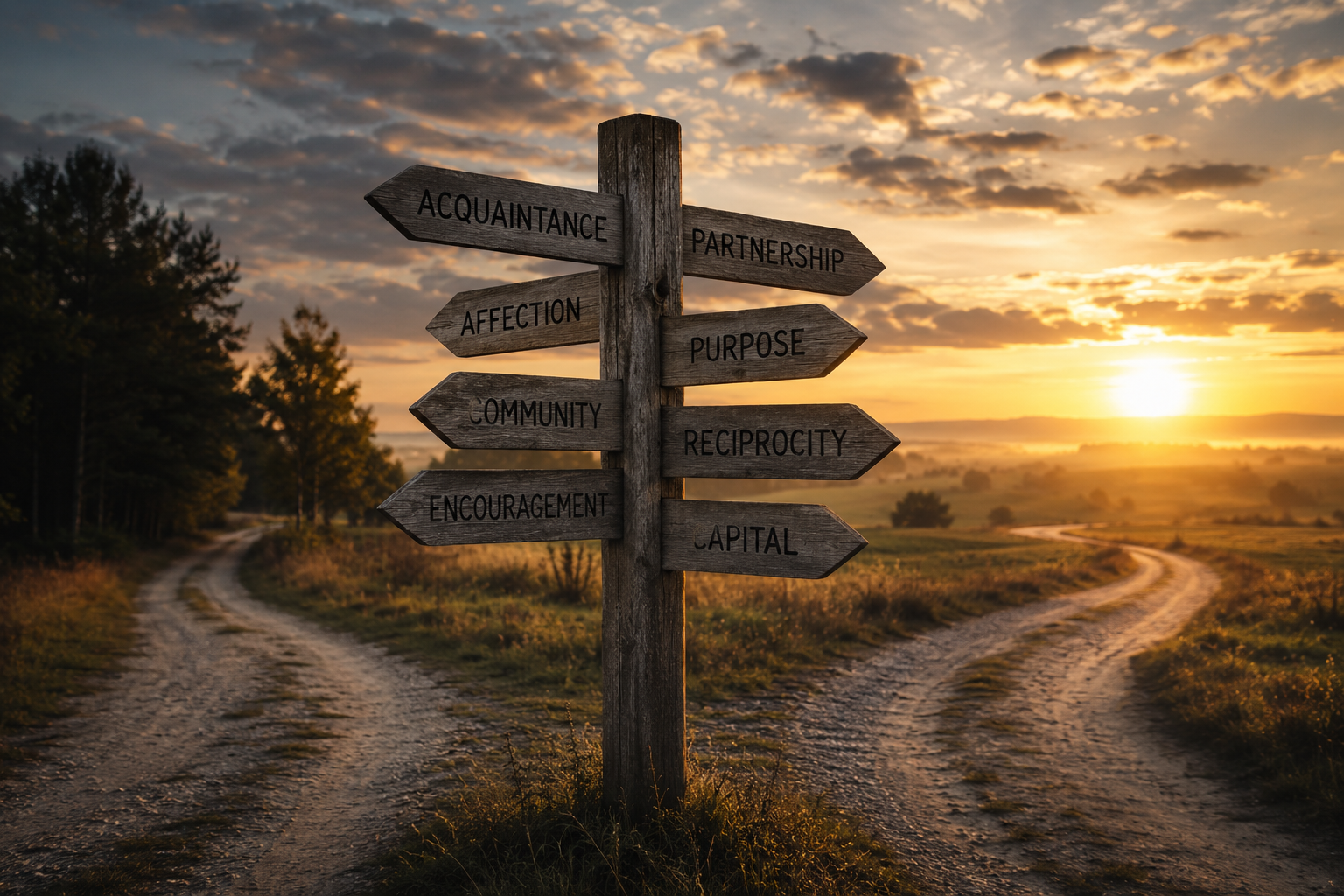
As I thought through those definitions, one word kept coming to mind: reciprocity. A word not in any of the definitions. In a group, there is a common purpose to show up and deliver for the group, whether at work, church, or serving a non-profit charity. At work, the paycheck is the reciprocity. At church, the communal fellowship. A charity helping those less fortunate. The first, money. The other two, a sense of well-being and joy of serving others.

For affection/esteem, the reciprocity is individualized, rather than a mutual outward goal. “What have you done for me lately,” tends to be a default. Divorce is a visible representation of what that could turn into. Unfriending in social media terms. Maybe there was an alignment in the beginning and when that alignment ceased to exist, so did the friendship.

What I think I want to say is that I do not know who I can call on for help when I need it. The friendships I have cannot help me in the ways I need help. Medically, the VA has been a struggle for the last fifteen years. Occupationally as an independent contractor, the work is inconsistent as I pray for God to lead me to those that he has prepared for me to help. As a writer, I am still looking for an audience as I continue to write more.

I am a writer, creator and builder. I enjoy the preproduction preparation process that goes into any endeavor. I enjoy tracking one-step ahead with flexibility to have alternatives ready in the moment of production. I enjoy starting with little to nothing and seeing what mutual reciprocity toward a project can create, valuing the input of all its members.

What type of ‘friends’ am I talking about when I say I have no friends? If the groups mentioned in the definitions all require capital, maybe I need a bank to be my friend. Perhaps what I’ve been looking for in friendship is really partnership. I have some projects I would like to see get off the ground. Maybe I can find ‘friends’ interested in the projects I can pay with the capital? If I am assisting others with their needs, who is helping me with mine?

I do not say that to undersell the affection, encouragement, and inspiration the friends I have already give me. That is real, and I do not take it lightly. But affection and capital are not the same currency, and I have been asking one to do the work of the other.

I jumped to banks without the backstory of bartering, trading, and reciprocity. If I give of my time, talent, and treasure, and do not receive gratitude, compensation, or reciprocity, I have to reassess the relationship. I can do my part to find common ground, voicing grievances respectfully, placing myself in the other persons’ shoes, with patience and empathy. The value of the person is more than what they bring to the table. Improving through respectful confrontations with friends can strengthen the friendship or find the line where the friendship has come to an end.

I have heard it said that people will come into your life for a moment, a season, or a lifetime. Only a few will make it to a lifetime.

Some were guides who could only lead me so far before the season passed. Some, if I am honest, were distractions I mistook for direction. Others had only a moment to affect how I would make choices going forward. And some seasons ended not because they left, but because I did — still searching for a group I hadn’t found yet.

Have respect and love for those that were there for a moment and a season, the lessons learned and growth in self. Reflect on the positives and learn from the negatives with admiration. Have mercy, grace and gratitude for yourself and those you have been given time on this earth with.

I pray for forgiveness from those whom I may have let down. The path others had for me was not the one I was on. As mentioned in my media memoir, What Was Meant for Harm, I am no longer seeking but being still for Him who created me and knows what He has prepared for me to accomplish in this life.


The Common Thread: Charlie Kirk, LEGO, & #SaveStargate

Let me say the common thread plainly: My distrust in authority and institutions is strengthened by the actions taken against the common man.

  • The alleged cover-up of the Charlie Kirk assassination by governmental authorities and Turning Point USA.
  • The alleged theft of consigned LEGO through Bricks & Minifigs and Utah police against Reckless Ben on BAM’s behalf.
  • The cancellation of a greenlit Stargate reboot by Amazon/MGM Studios at the crest of preproduction, to the dismay of over 100,000 fans around the world.

The current status of these events has a common thread. It may not seem obvious at first. It wasn’t for me. Outside my normal day-to-day, these are the stories in the past month that have stuck with me.

The Charlie Kirk assassination has not been solved. Reckless Ben versus Bricks & Minifigs (BAM) continues to federal court in Utah. Fans of Stargate petition Amazon/MGM Studios to move forward with the new series greenlit in November 2025. All three are ongoing: two are working through Utah courts, one through corporate boardrooms.

Charlie Kirk

Since the release of my media memoir, What Was Meant For Harm, Tyler Robinson has been on trial for the murder of Charlie Kirk. Candace Owens, Baron Coleman, and others including myself have questioned the official narrative surrounding Charlie Kirk’s death.

I do not know who, how, or what killed Charlie Kirk. Too many loose ends, logical fallacies, unanswered questions, changing behaviors and policy positions, and missing evidence to conclude the official story is accurate for me.

I mention the ‘bullet’ that killed Charlie Kirk in the book. I’m not so sure it was a bullet now.

The RODE microphone transmitter is currently in question. Glass shards were seen in SUV photos with questionable chest wounds. Inconsistent eye witness statements were given to news outlets. Crime scene evidence paved over by Monday. Blood-ridden clothes discarded. No autopsy. SD cards removed. Questions deflected by government officials and representatives of Turning Point USA, including odd appearances and comments by Charlie Kirk’s widow, Erika Kirk.

Whatever the truth turns out to be, what Charlie Kirk gave me — hope for the next generation — hasn’t changed.

LEGO

In November 2025, I took my family to Legoland Florida. My son, wife, and I have bonded through LEGO. Little did I know that YouTuber Reckless Ben was about to discover Bricks & Minifigures was allegedly “stealing from old people.”

A ~$200K Star Wars collection was consigned to a BAM franchise in Oregon, consignor not paid for the sets until sold. Corporate BAM in Utah took over the store, the consignment, and the remaining Star Wars collection, without compensating the owner. Reckless Ben created videos attempting to assist the consignor in receiving compensation. Local police in Oregon and Utah dismissed the accusations, trespassing the consignor and YouTuber from confronting the alleged thieves.

The courts got involved. Reckless Ben silenced with a Temporary Restraining Order prior to publishing part three of his BAM-consignment confrontation series. The Utah State Court originally assigned to the case was the same judge as the Tyler Robinson case. It has since moved to the federal court in Utah.

Why bother LEGO with BAM issues?

LEGO is the primary market. BAM is the secondary market. As the secondary market declines, so does the primary market as they are less likely seen as good investment vehicles. I have invested in the educational value of LEGO for our son, with the awareness of the potential for future growth in value over the years.

#SaveStargate

On June 2nd, 2026, Amazon/MGM Studios cancelled a reboot of the Stargate franchise, with Stargate Atlantis alum, Martin Gero. The cancellation is alleged to have been caused by executive changes. Over 100,000 Stargate fans have spent the better part of the month petitioning on change.org and social media, two Times Square screens, and a banner flyover the studio’s headquarters, hoping to overturn the decision.

I remember watching Stargate with my dad when I was younger. Reruns allowed us to watch multiple episodes in different seasons on different basic cable channels. I printed off an episode list so we could track which ones we’d seen and which ones we hadn’t. My dad’s digital video recorder was filled with episodes we could catch up on when schedules aligned.

While deployed in 2009-2010 to Kirkuk, Iraq, I had ten seasons of Stargate SG-1, five seasons of Stargate Atlantis, and two seasons of Stargate Universe to watch. The entertainment was appreciated as a reprieve in between 12-hr emergency room shifts on the forward operating base.

Where I Stand

The multi-generational importance of values shared by Charlie Kirk (Truth and Freedom), LEGO (Play Well), and Stargate (Hope) is in direct contrast with what TPUSA (deception), Bricks & Minifigs (theft), and Amazon/MGM Studios (cancellation) are doing.

These aren’t abstract slogans. They’re the reason a father watches Stargate reruns with his son, the reason a veteran builds LEGO sets with his own boy years later, the reason a generation believed a young activist when he said truth and freedom were worth fighting for. Each value was handed down, generation to generation, as something worth preserving. And each institution charged with carrying that value forward has instead betrayed it: TPUSA and the agencies investigating Kirk’s death have offered deflection where truth was owed; Bricks & Minifigs took from a man’s trust where fair dealing was owed; Amazon/MGM cancelled hope at the exact moment 100,000 fans had reason to believe it was finally coming back. The institutions didn’t just fail. They inverted the value they were supposed to protect.


What I Found

Yesterday I published I Am Trying to Remember What I Lost — a piece about finding a church history video and breaking down crying at my desk before sunrise. I didn’t expect what came next.

By evening, my sister confirmed the year of the youth group trip to Disneyland — 1992. She remembered the earthquake from west Phoenix, water sloshing out of the pool.

My cousin Michael confirmed it too. He was in 8th grade during the Disneyland trip. His family left for Rio Rancho, New Mexico in January or February of 1993.

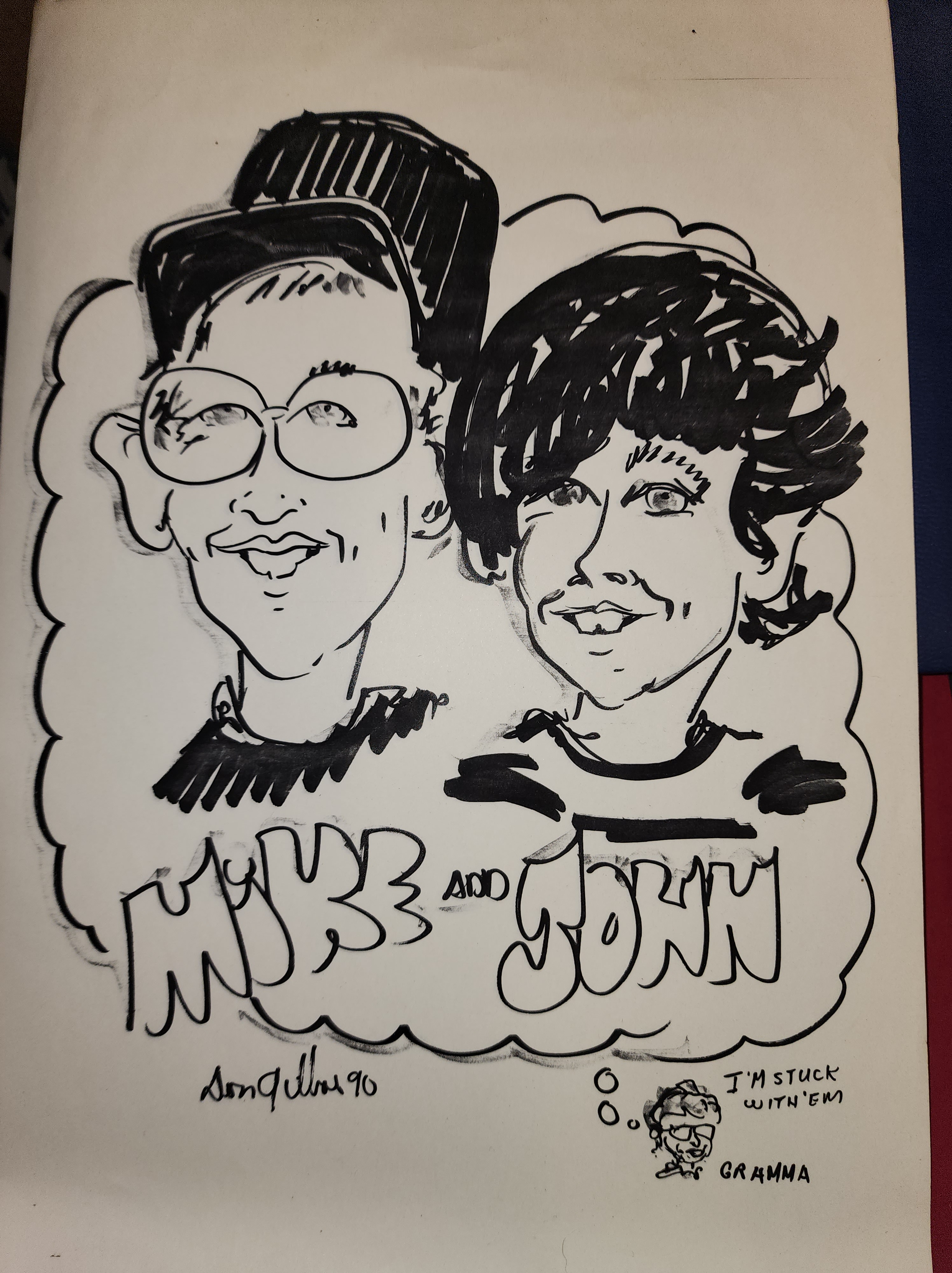
Caricatures of cousins Michael and John at Revlon picnic with Grandma Wilma Stout in 1990.

Reading his comment, it came back to me — in the first week of January 1993, before they left, we sat together at my mom’s two-story house and wrote interview questions for Phoenix Suns head coach Paul Westphal. A “What If?” scenario we began to plan out. I interviewed Westphal alone in March.

The title of that post is a question I thought I was asking about a church, about faces in a video, about names I couldn’t place. Why did I have a difficult time trusting church institutions? What was it about that season that changed my childhood forever?

It turns out I was asking about Michael. My cousin. My childhood best friend. The one I lost when his family moved to New Mexico in 1993.

I didn’t have words for what that meant. The gratitude I have for those at St. Paul and those within my family living locally had been blocked by one bad story on repeat in my head. I had to get beyond the story to see what was really missing.

It didn’t take much for me to begin acting out after that. By the summer of 1993, I had moved from my mom’s house to my dad’s house, less than three miles away. New school. New church. New friends to meet. A story for another day.


I Am Trying to Remember What I Lost

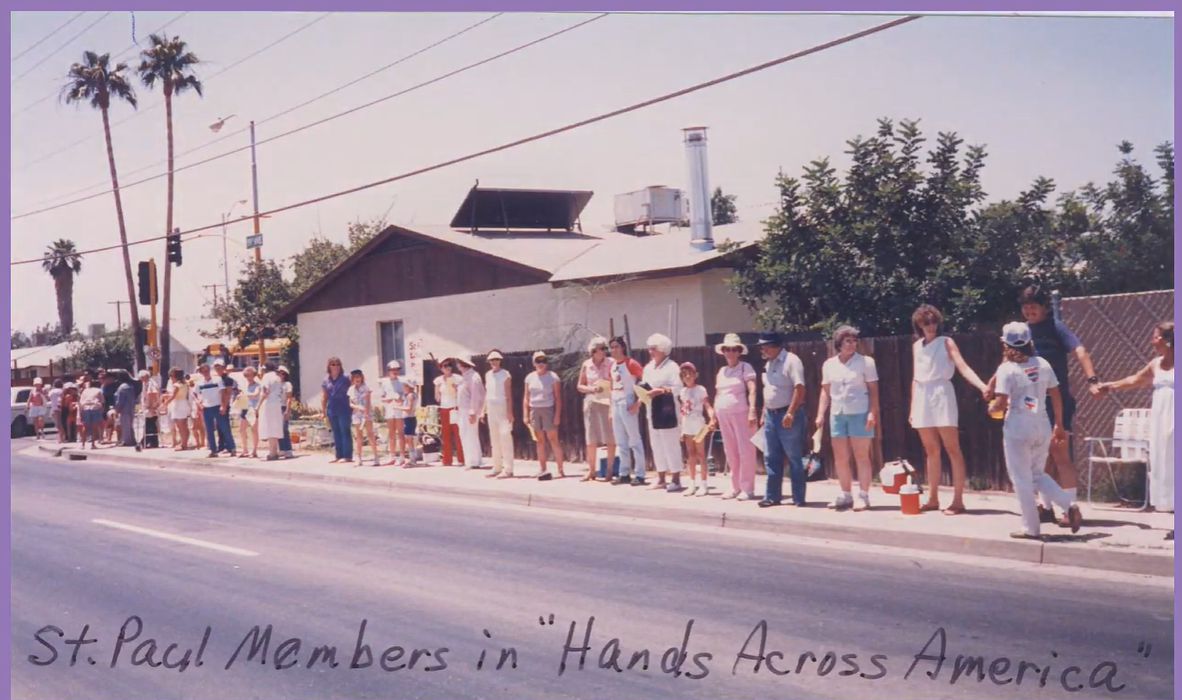
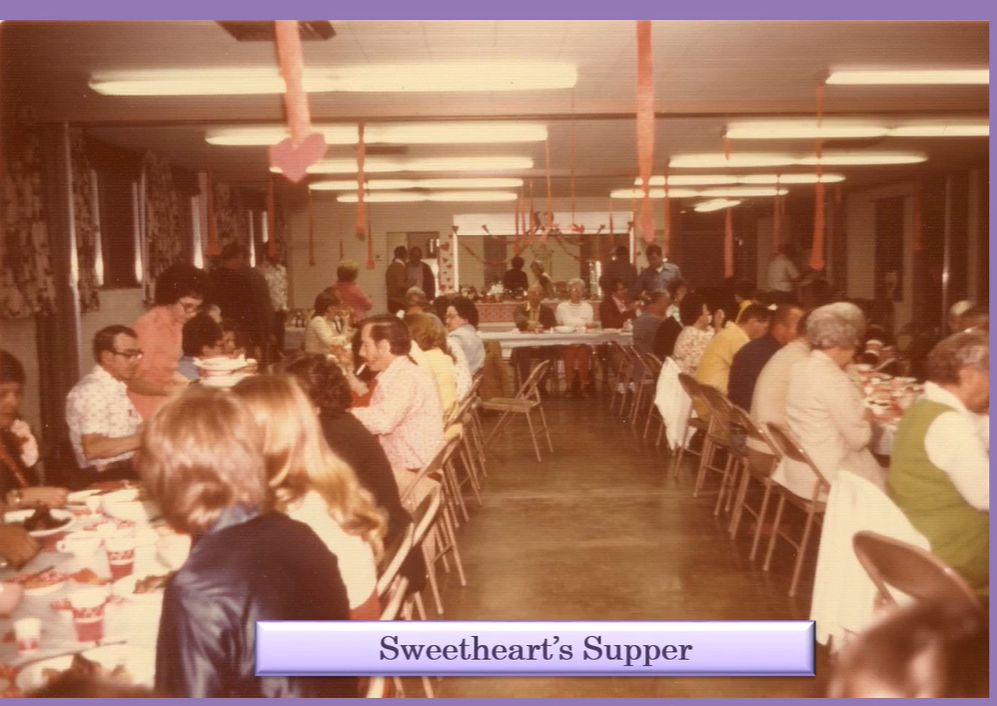
https://www.stpaullutheran-az.com/60th-anniversary-presentation

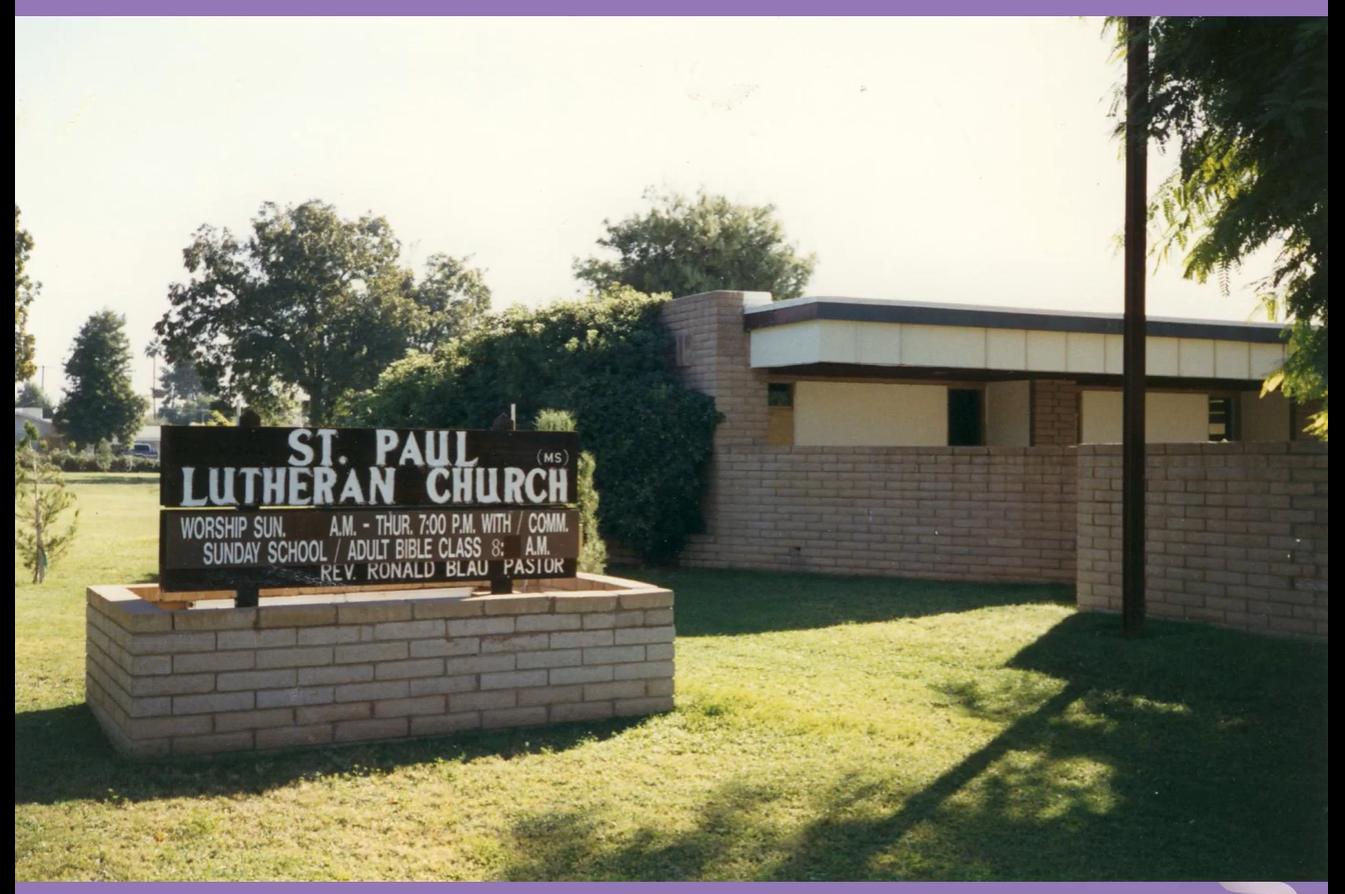
I looked up St. Paul Lutheran Church to research and remember this morning.

I didn’t expect to break down crying.

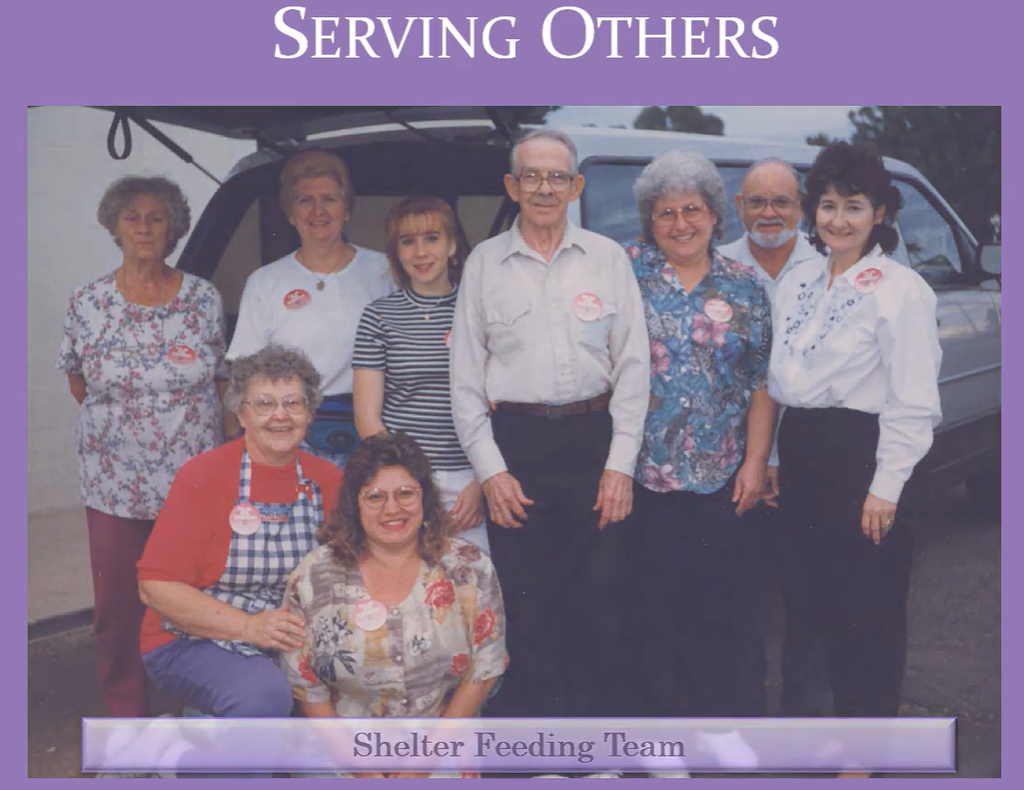
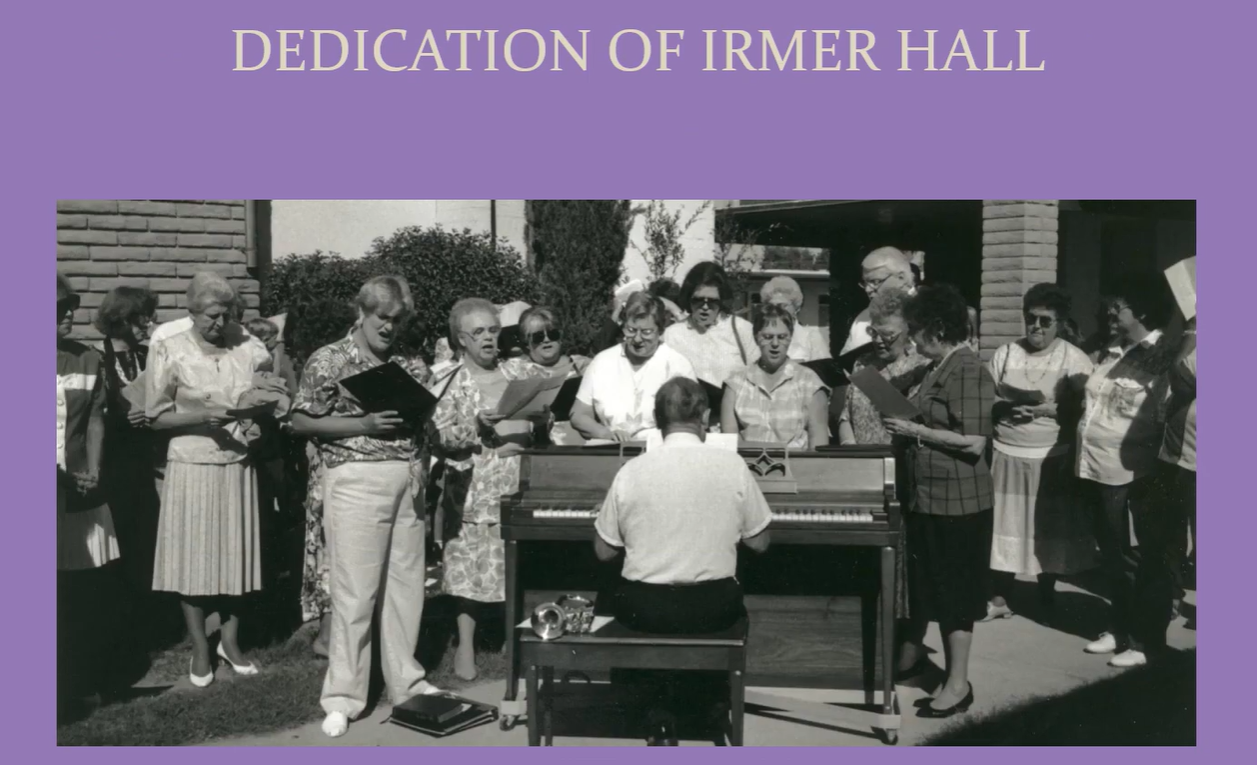
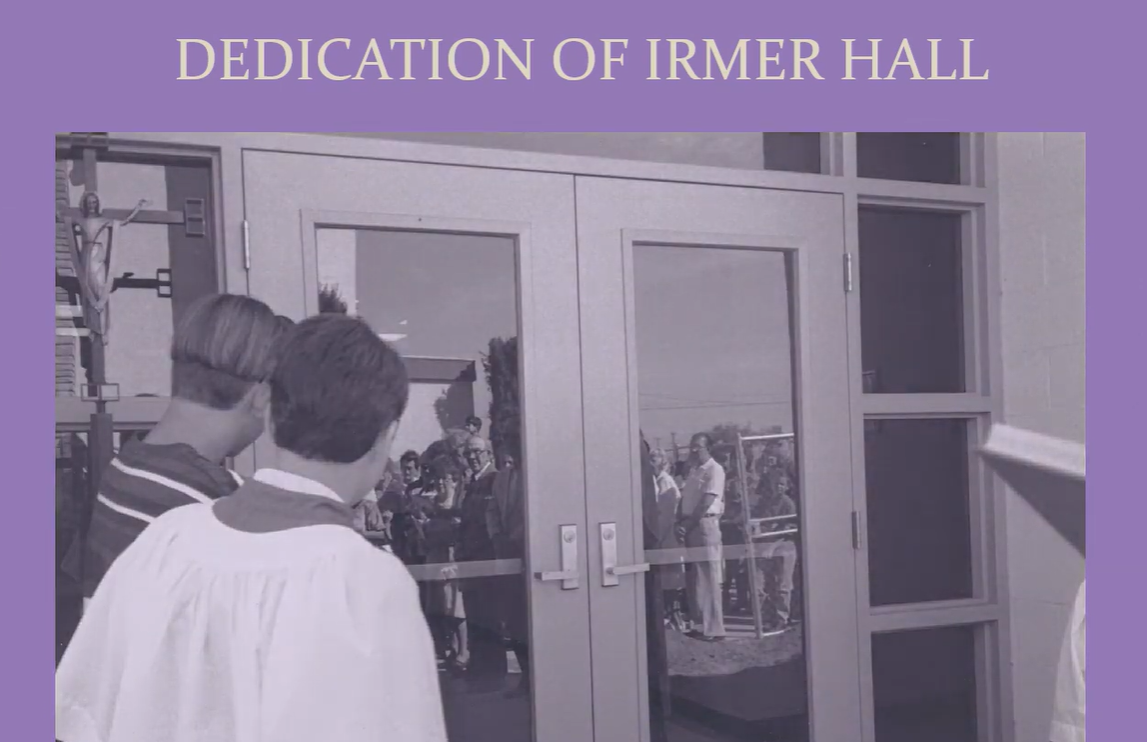
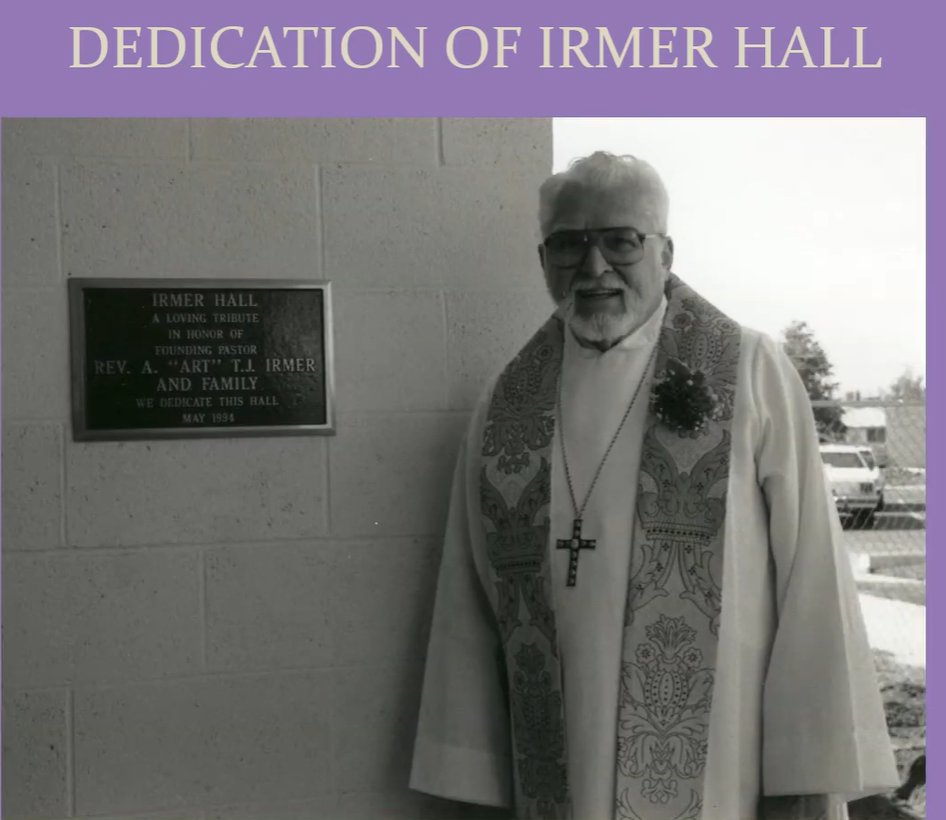
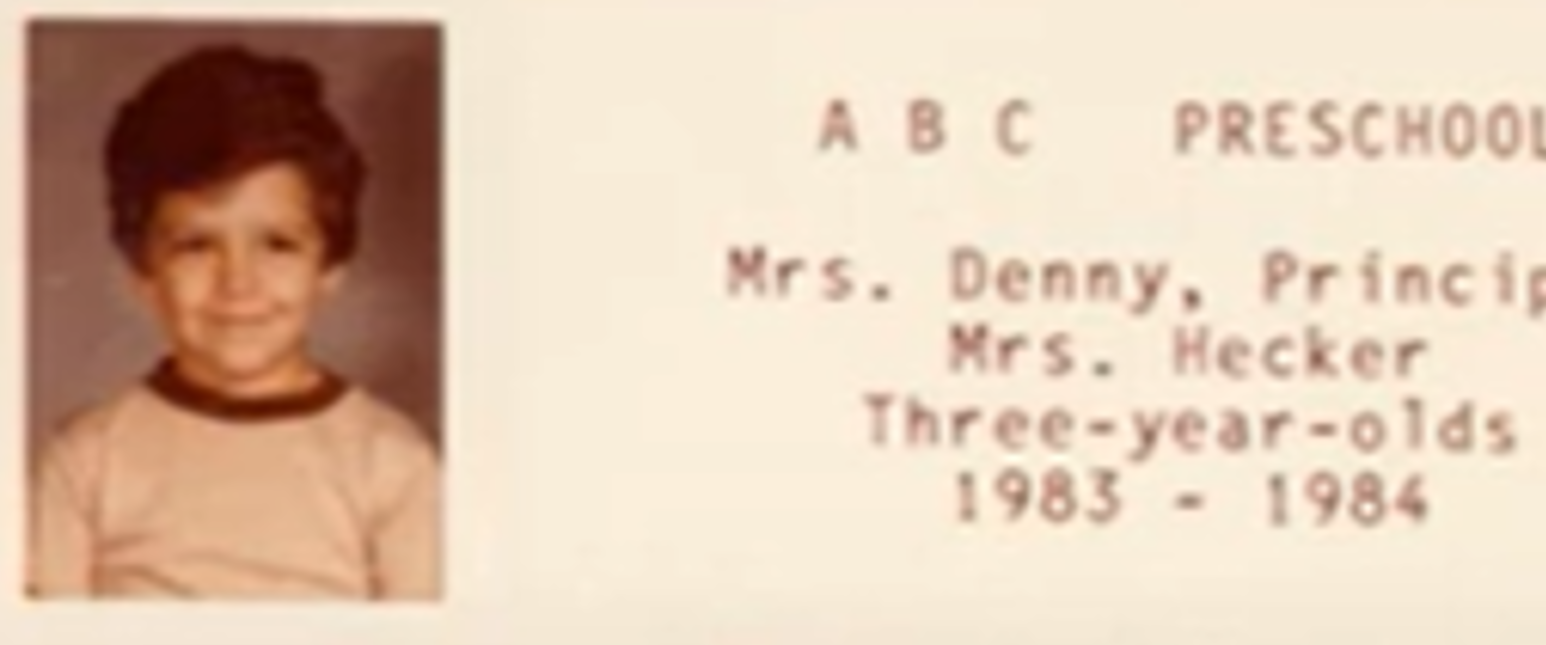
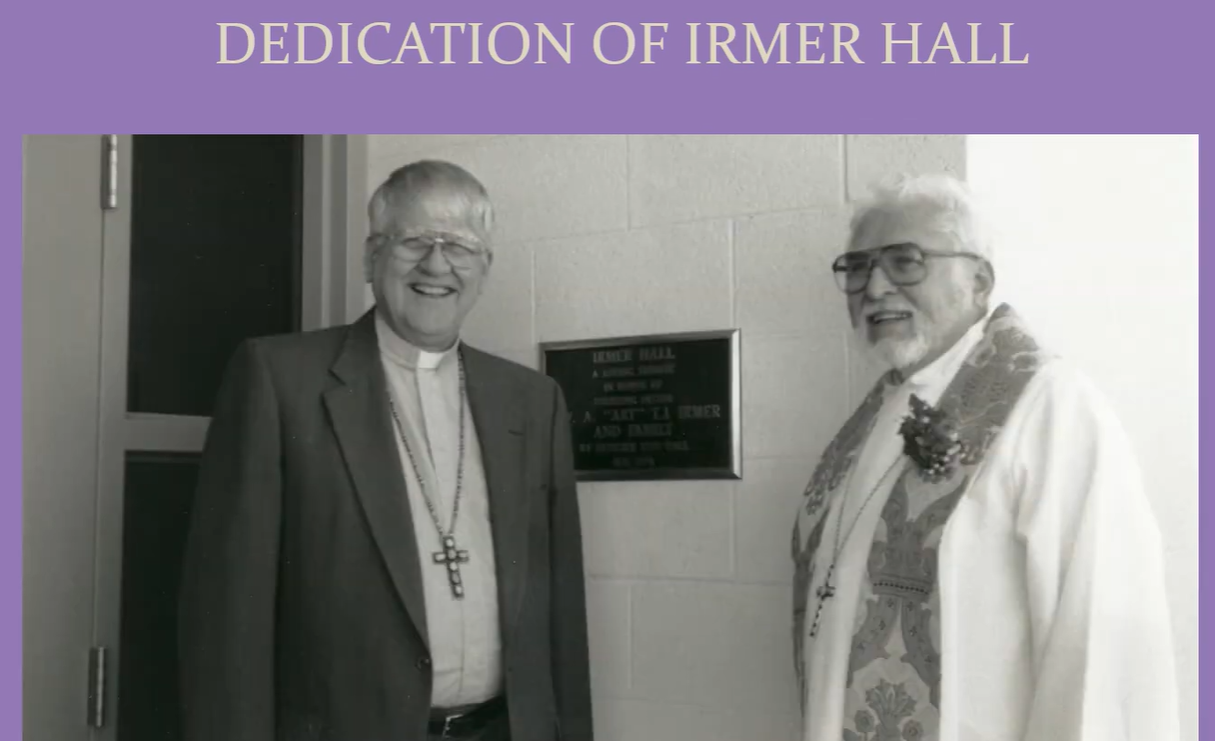
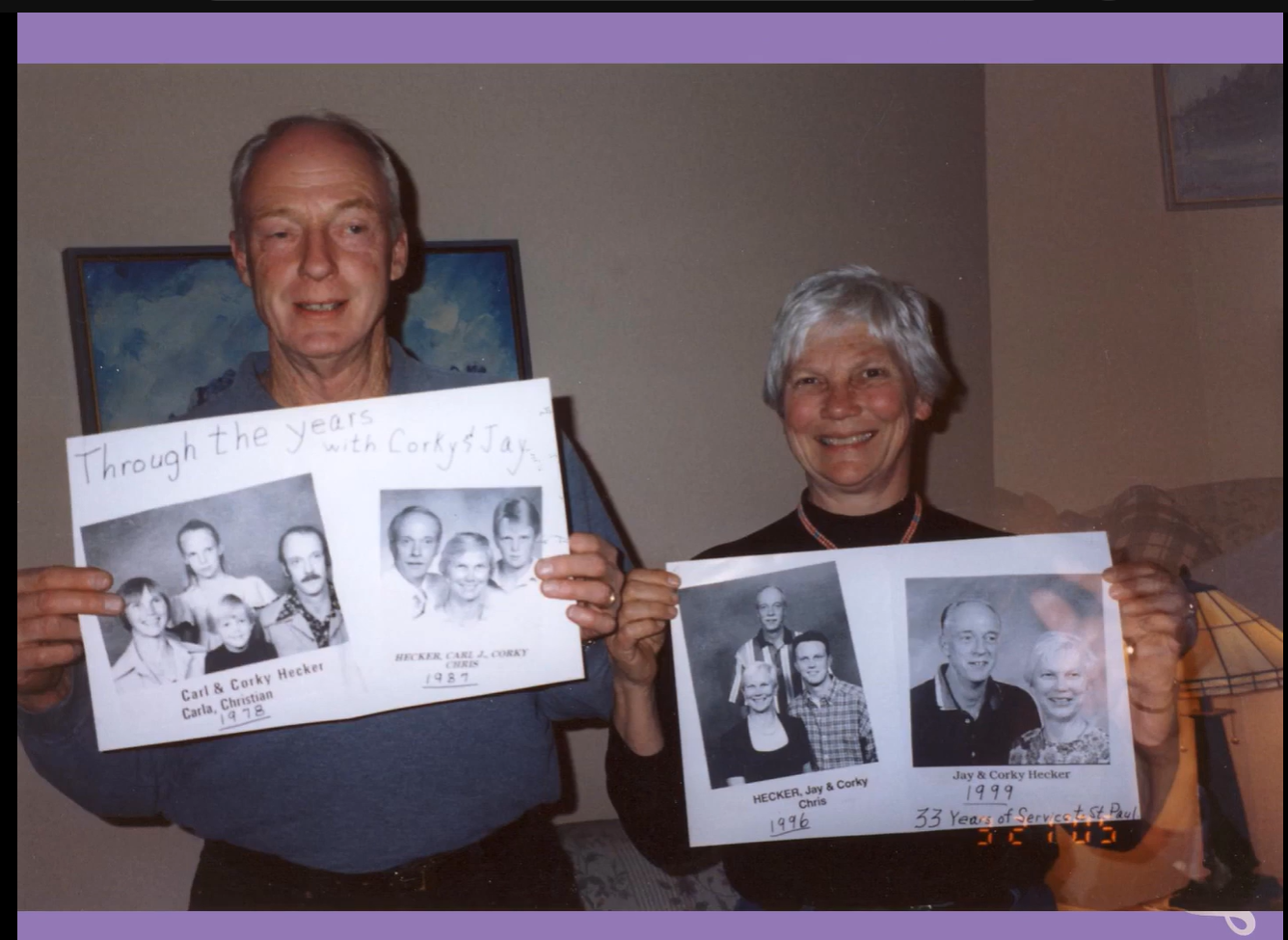
I am a grandson of Jim and Wilma Stout. I was baptized as a baby at St. Paul Lutheran Church in Maryvale, a west valley suburb of Phoenix, Arizona, by Pastor “Art” Irmer in 1980. Mrs. Corky Hecker was my teacher. I left halfway through Pastor Blau’s confirmation classes in 1992 or 1993 — and I didn’t look back for a long time.

Watching this video, I kept seeing faces I hadn’t seen since my grandmother passed in 1994 and my grandfather in 2009, one month before I began my enlistment into the United States Army. I kept watching — familiar faces I could no longer name. Their names were lost somewhere in my childhood memories and were now flooding back.

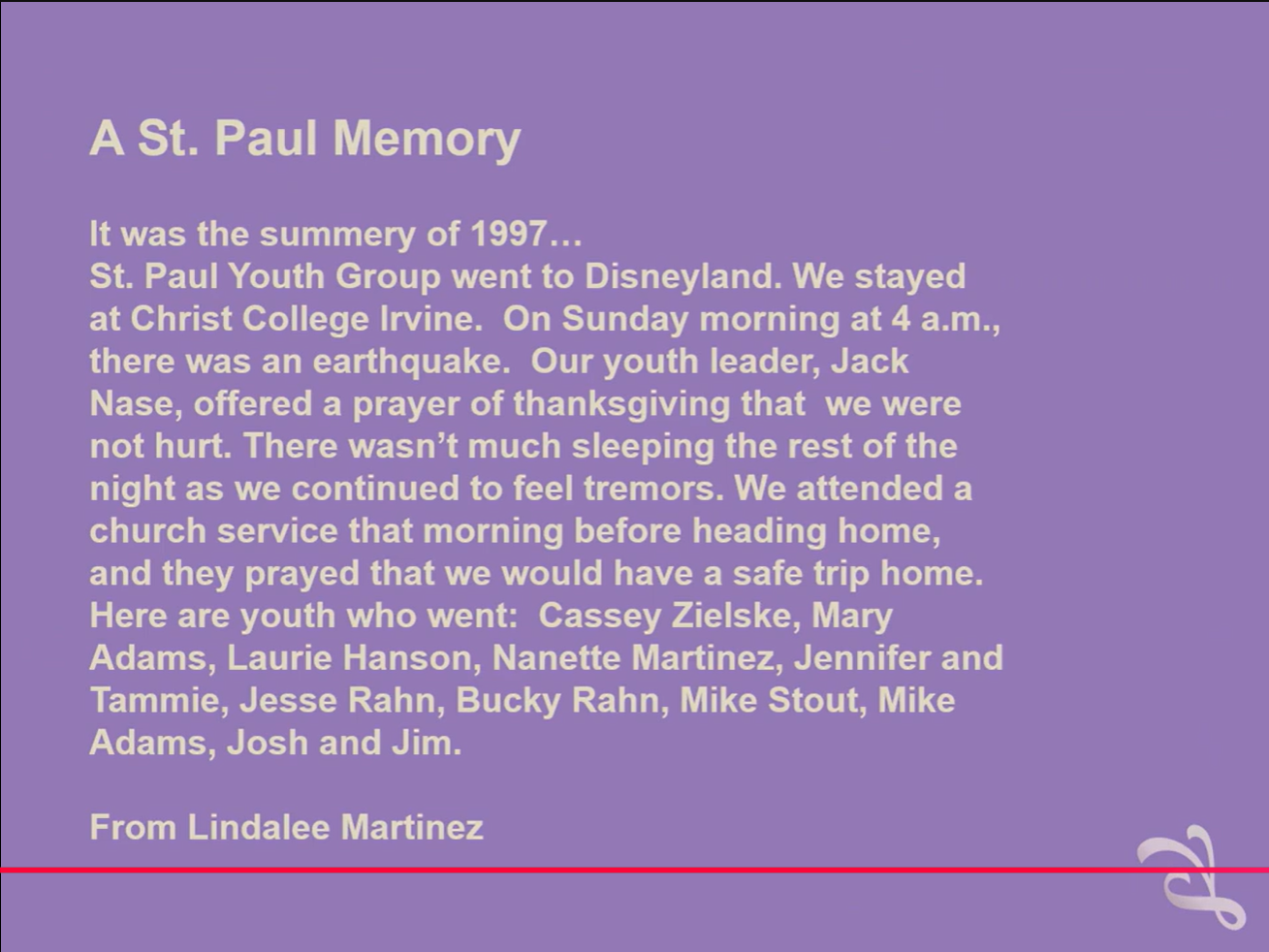
Over halfway through the video, I was stopped in my seat. A memory from Lindalee Martinez:

Knowing I had left St. Paul by 1993, I knew Lindalee’s memory was off by a few years. I recognized the names she shared instantly, my cousin Mike Stout being the most obvious. His family had moved to New Mexico around the same time, confirming the 1997 mistake.

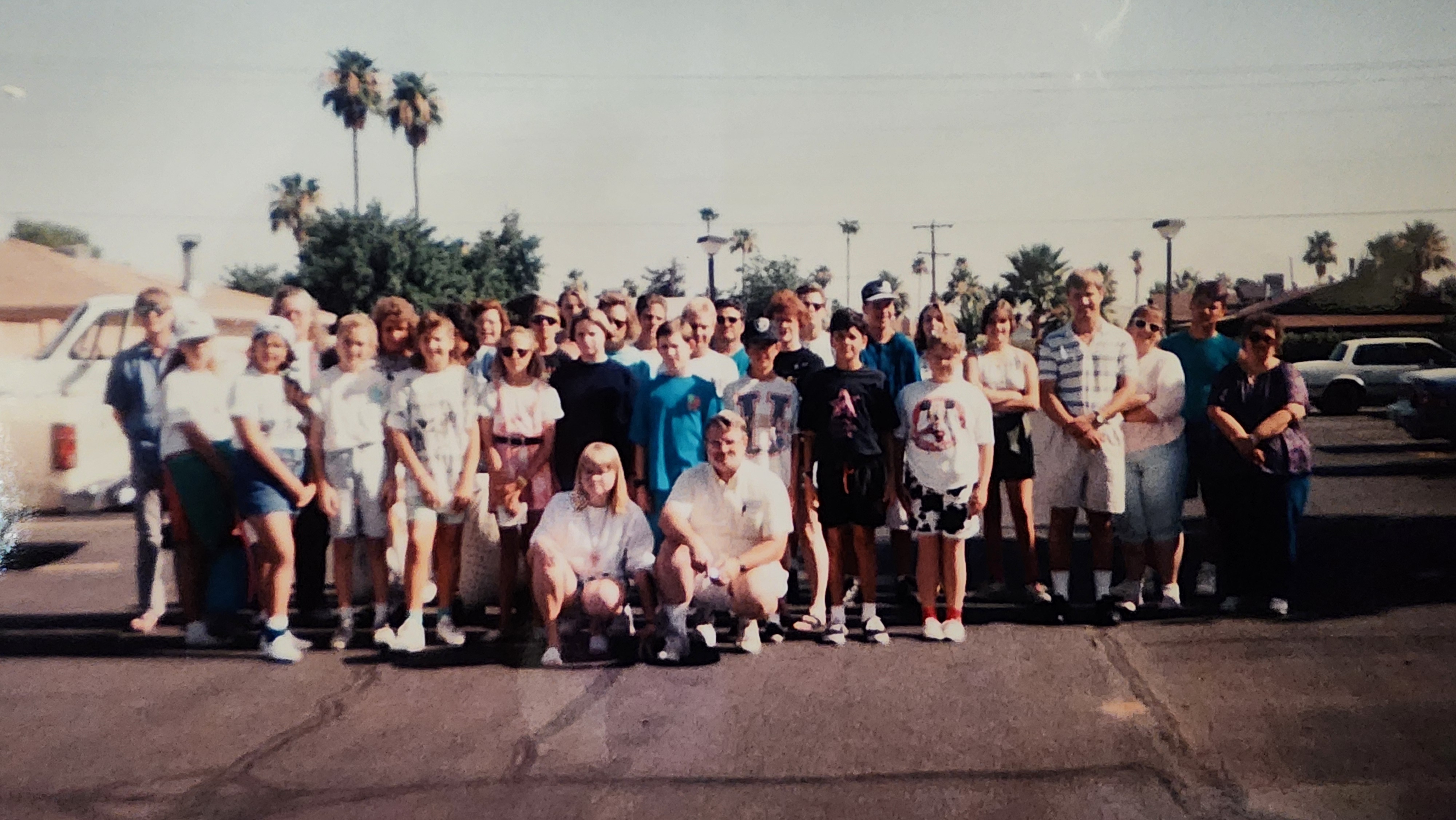
My best friends, Josh, Mike Adams, and Jim’s names jumped off the screen. I remembered still carrying pictures of Cassey, Mary, Laurie, Nanette, Jennifer, Tammie, Jesse, and Bucky from the trip to Disneyland, too. So I dug out an old photo album, thinking it might have the date imprinted on it. Unfortunately the date wasn’t there, but the image showed many more people not mentioned, albeit a blurry picture.

St. Paul Lutheran Church Youth Group – Trip to Disneyland and Christ College Irvine, California.

I remember the early morning earthquake, preparing for the day in a college locker room. It was the first earthquake I can recall experiencing, though not in fear. I later found out that it was also felt in west Phoenix, or at least tremors. It was the last memory of innocence, joy, fun, Christ-filled community I have from St. Paul Lutheran Church.

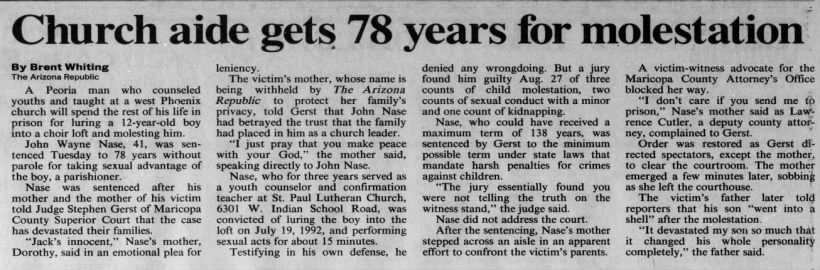
Seeing John Wayne “Jack” Nase’s name angered me. Seems he died in 2018. My mother had allowed him to talk to me over the phone. He wanted me to testify against my friend whom he had hurt. A 13-year-old myself, I listened to his alleged lies, stood shaking, declined and hung up. My mother consoled me. I reached out to my friend to lend him my support, but a short conversation with his dad was the end of the friendship.

I am now 46 years old, and I have a difficult time walking into a church. I have a difficult time trusting people inside one. I was told that my parents had been excommunicated from St. Paul for their divorce when I was three. I attended with my grandparents as a child on purpose, as a choice. Away from home. Closer to Jesus.

The church I attended from 13 years old through 18 didn’t fare much better. A senior pastor and worship leader having an affair. A church in my twenties falling to the same, senior pastor commits adultery with secretary. An Army chaplain in Iraq who didn’t show up. There are years of damage I am still sorting through.

And yet.

The foundation I received from St. Paul — from my grandparents, from aunts and uncles, from cousins, from the people in this video — held. It held through all of it. My faith in the Lord has never left me. I have always prayed. I have always sought God. Not because the institutions were safe. Not because everyone in them was good. But because specific people planted something real in me before I was old enough to know what it was worth.

Pastor Irmer. Pastor Blau. Mrs. Hecker. My grandparents. My aunts and uncles. So many more faces in the video, disconnected from names, allowed my spirit to respond with a release of a childhood long buried. Their smiles. Their love. Their care. The Holy Spirit and love of Jesus Christ came pouring out of them in my memory.

Thank you to the remaining family of believers at St. Paul Lutheran Church. While the video is a few years old, it means more to me this morning than you could ever realize.

I want it on the record that I am grateful. What they put in me survived what came after. That is not nothing. That is, in fact, everything.

I published my first book last month — What Was Meant for Harm — and if you’ve read it, you’ll understand why I ended up back here, in this video, looking at these faces, crying at my desk before sunrise.

“May the Lord bless you and keep you; the Lord make his face shine on you and be gracious to you; the Lord turn his face toward you and give you peace.”


The Daily Wire Was a Warning of What I Didn’t Want to Become

by John-Quinn Mulquin Jr.


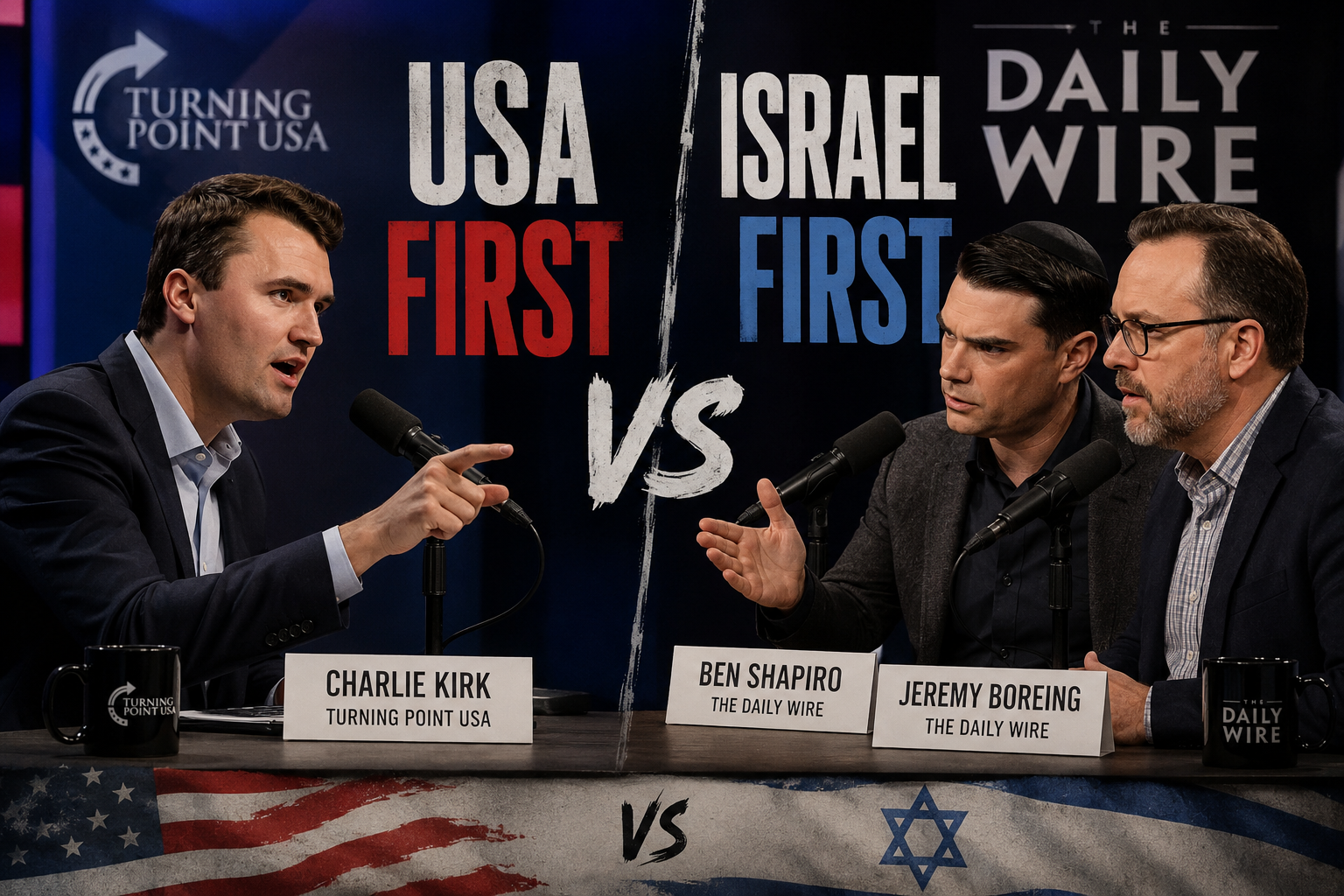
The Daily Wire announced mass layoffs last week. Ben Shapiro’s YouTube channel has shed somewhere between a third and nearly all of its audience since 2023, depending on whose numbers you trust and what baseline you use. The company that once dominated conservative digital media is restructuring, bleeding staff, and drawing fire from former allies and mainstream outlets alike.

I watched The Daily Wire from its rise to this moment. I wrote about it. And I have a perspective that isn’t available to media critics who were never inside the audience they’re now eulogizing.


AI Image created with ChatGPT

Where It Started

The memoir documents an era when The Daily Wire represented something genuinely new. Ben Shapiro had left Breitbart and built something that felt more rigorous than the tabloid right, more honest than the institutional press.

The Daily Wire was emerging as a powerhouse from Los Angeles. Ben Shapiro left Breitbart after he cofounded The Daily Wire with Jeremy Boreing in 2015. He embodied thoughtful analysis with his Sunday Special interviews and conversations with the Intellectual Dark Web.

That’s an accurate description of what it felt like from the outside at the time. The Sunday Special was appointment viewing for my early morning routine. Shapiro was treating ideas seriously hearing Christian perspectives. The platform was building something.

And then the building started outrunning the foundation.


The Break That Mattered Most

The Daily Wire’s trajectory changed visibly when Candace Owens left in 2024. The memoir captures the aftermath:

Candace Owens had taken her viewers from The Daily Wire, continuing to ask questions and reviewing books forbidden by mainstream accepted narratives. Brett Cooper later followed Owens’ exit as they tried to replace her on The Comments Section with her former producer and maid of honor. A mistake that would cost the channel a large drop in viewership and trust.

That last sentence is the tell. The Daily Wire’s response to Owens’ departure wasn’t to acknowledge what had driven her audience — questions the platform had decided were too costly to ask — but to find a replacement. It didn’t work, because audiences aren’t interchangeable and trust isn’t transferable by personnel swap.

A 34% viewership drop from Shapiro’s channel between April 2025 and April 2026 is real, whatever the baseline debates. A company-wide restructuring with confirmed layoffs is real. The audience that built The Daily Wire didn’t disappear — it redistributed to voices willing to go further than the institution allowed.


What Corporate Conservatism Actually Costs

By early 2026 the memoir had reached its diagnosis:

Corporate conservatism had failed its audience.

That’s not a hot take. It’s an observation earned across years of watching platforms make institutional choices — about which advertisers to protect, which debates to avoid, which hosts to silence — and then wonder why their audiences concluded the institution mattered more than the truth.

The Daily Wire’s early credibility came from appearing to operate outside that logic. Shapiro built a brand on facts not caring about your feelings. That posture works until the facts become inconvenient for the brand. Then the question is whether you follow the facts or protect the brand. The audience noticed the answer with three letters: NDA.


The Deeper Lesson — For Me

The memoir isn’t a media autopsy. It’s a personal reckoning. But I watched The Daily Wire closely because I was building something of my own — Quinn’s Next Step, the memoir, the platform — and I needed to understand the failure modes.

What I saw in The Daily Wire’s decline was a cautionary tale about building an audience around a personality’s certainty rather than a community’s honest inquiry. Shapiro’s greatest asset — the rapid-fire, debate-me confidence — became the ceiling. It attracted people who wanted to be told they were right. It repelled people who wanted to be helped to think. Shapiro simply stopped debating in good faith.

I came home from Iraq with too many questions to trust anyone who claimed all the answers. The institutions that earned my long-term attention were the ones willing to say: I don’t know yet. Let’s find out together.

The Daily Wire was never that. It was very good at what it was. And what it was had a shelf life.


What Lasts

The memoir ends with a question I’m still living: what does it look like to build something that doesn’t depend on institutional protection, algorithmic favor, or a personality’s ability to stay ahead of the story?

Charlie Kirk pointed toward an answer. Patrick Bet-David called him a combination of Reverend Billy Graham and Rush Limbaugh — not because he was a celebrity, but because he understood that the work was bigger than the platform.

The Daily Wire built a platform. Kirk built a mission. That difference is now visible in what survives as TPUSA joined the decline after his death.

I wrote a memoir about a veteran trying to figure out which one he was building. The answer, I believe, is in the book.


Read What Was Meant for Harm, available now on Amazon: https://a.co/d/05juIdfJ

Kindle, paperback, and hardcover.


John-Quinn Mulquin Jr. is a U.S. Army veteran, author, and founder of Quinn’s Next Step. He lives in Texas with his wife and son.

Standing in the Fire: Candace Owens After Kirk

by John-Quinn Mulquin Jr.


Charlie Kirk’s former security chief filed a federal defamation lawsuit last week against Candace Owens, alleging she falsely accused him of conspiring in Kirk’s assassination. The suit names Brian Harpole. He claims he was in Dallas when Owens placed him at a secret meeting at Fort Huachuca, Arizona, and accuses her of running a months-long campaign to destroy his reputation. Owens responded on her podcast, welcoming the subpoena power the lawsuit would give her.

The machinery of that dispute is now in the courts. What interests me — and what’s in the memoir — is what it reveals about a person I was watching closely long before any of this.


She Showed Up Early in the Narrative

The memoir isn’t a fan account of any media figure. It’s a record of what I was consuming, thinking, and processing as a veteran trying to make sense of a fracturing country. Candace Owens kept appearing in that record — not because I went looking for her, but because she was there.

She was at the intersection of culture, faith, and political commentary in a way few others were. She left Turning Point USA, BLEXIT, PragerU, and The Daily Wire. She built her own platform. She was asking questions that the mainstream media was either ignoring or actively punishing people for asking.

By 2024, the memoir records:

Candace Owens had taken her viewers from The Daily Wire, continuing to ask questions and reviewing books forbidden by mainstream accepted narratives.

That sentence is not praise or criticism. It’s observation. She had an audience that trusted her more than the institution she came from. That’s a significant thing.


She Was Doing Something Harder Than Most

After Charlie Kirk’s assassination in September 2025, the landscape broke open in ways that were ugly and fast. The memoir describes it plainly:

After a bizarre response from Israeli Prime Minister Benjamin Netanyahu, Candace Owens questioned the narratives surrounding what she described as a Kennedy/King-level assassination and cover-up of one of her closest friends. The media landscape would attack her immediately, choosing to vilify her rather than debate her claims.

I wasn’t tracking her because I agreed with every curiosity she gave her audience. I was tracking her because she was willing to ask common sense questions in search for the truth. Whether her specific imaginations prove out in court or collapse entirely, the pattern she identified — the media’s refusal to engage the questions on their merits — was real and visible to anyone paying attention.


The Personal Dimension

The memoir also captures what happened inside the conservative media ecosystem after Kirk died:

TPUSA went one way. Candace Owens went another.

Charlie’s life was not pointed toward himself or how big TPUSA could get, but toward Jesus Christ. Truth. Hope for the youth of America.

That’s the frame I was working from. Not “who’s winning the media war” but “who’s actually serving the thing Charlie said he stood for.” The battle for his legacy wasn’t just institutional. It was spiritual. And Candace Owens, whatever her perceived errors of method or fact, was at least asking: what actually happened, and why are people afraid to answer?

Those aren’t illegitimate questions. They’re just inconvenient ones.


What the Defamation Suit Reveals

The lawsuit will determine whether Owens’ specific claims about Harpole were defamatory. That’s for the courts. What the suit reveals to me — as someone who wrote about all of this while it was unfolding — is that the chaos following Kirk’s death was real, not manufactured. People who were close to the situation were in genuine conflict. Trust had collapsed. And in that vacuum, information — accurate or not — moved at a speed no institution could control.

I watched that from Fischer, Texas, in real time. I wrote about it. And I put it in a memoir that launched the same week the lawsuit was filed.


Why This Matters for the Book

What Was Meant for Harm is not a political book. It’s a memoir about a combat veteran who couldn’t stay in the military, couldn’t get the VA to move, stopped believing what the media said, and found that the church building mattered less than the people inside it — and found his way back to purpose through faith, family, and honest reckoning.

But the cultural landscape is part of that story. The media figures I was watching were not just entertainment. They were the people narrating the country I came home to. Candace Owens is in the book because she was part of that narration — and because watching what happened to her after Kirk died revealed something true about how quickly the ground shifts beneath people who step out of line.

Whether that’s a cautionary tale or a testimony depends on what happens next.

I just wrote down what I saw.


Read the full account in What Was Meant for Harm — available now on Amazon: https://a.co/d/05juIdfJ

Kindle, paperback, and hardcover.


John-Quinn Mulquin Jr. is a U.S. Army veteran, author, and founder of Quinn’s Next Step. He lives in Texas with his wife and son.

I Used to Watch The Rubin Report

by John-Quinn Mulquin Jr.


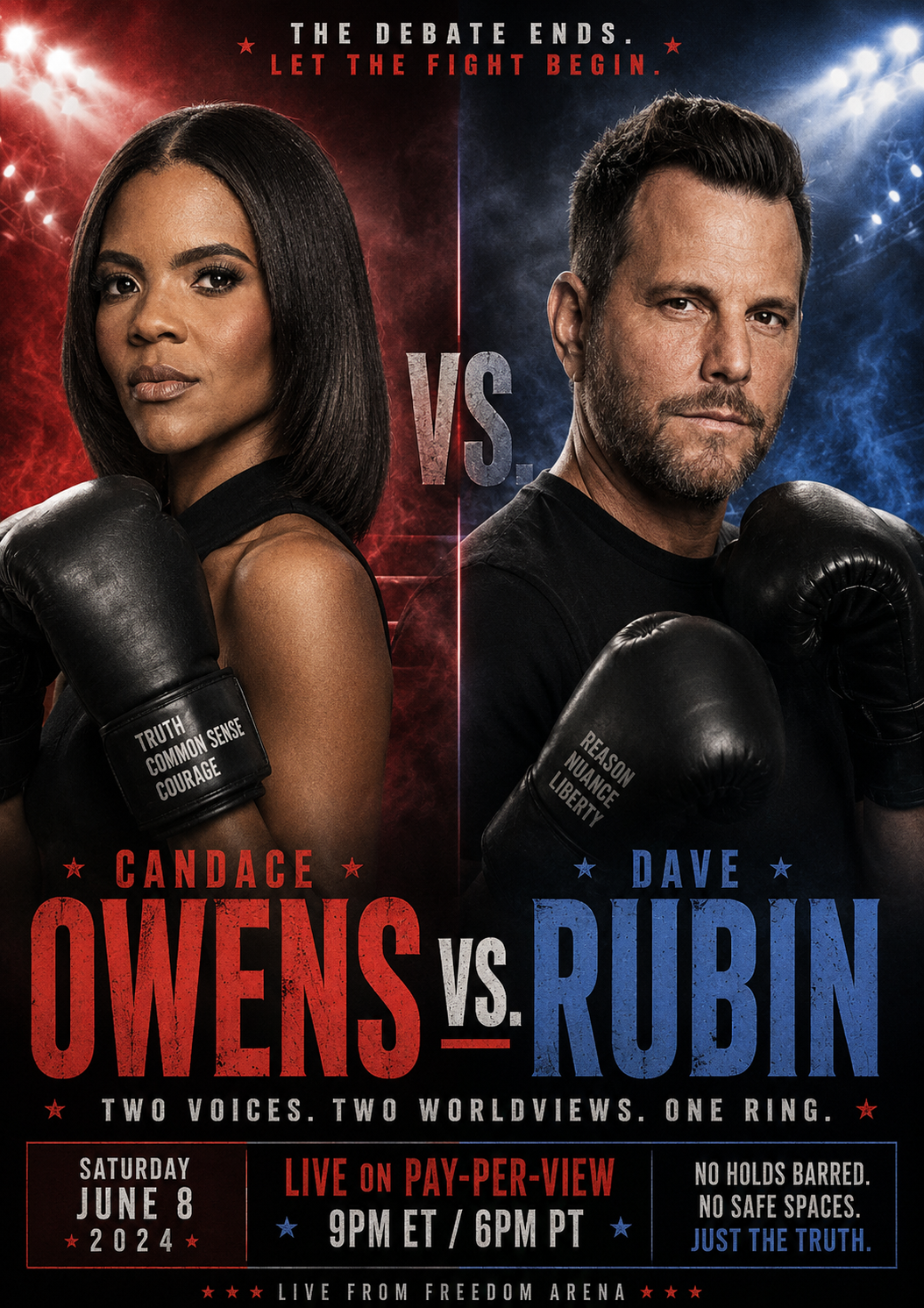
Dave Rubin and Candace Owens went to war publicly in the past couple years — accusations of dishonesty, betrayal, old grievances aired in front of millions. Rubin claimed Owens had spent an hour ranting against Charlie Kirk during a 2022 visit to his home. Owens called it fiction and accused Rubin of lying to protect his pro-Israel position. It was ugly, fast, and predictable to anyone who had been watching both of them for years. And I had.


Boxing-Style Poster created with ChatGPT

How Dave Rubin Entered My World

The memoir documents a long journey through the independent media ecosystem — the commentators, podcasters, and thinkers who filled the space mainstream outlets left empty. Rubin was early and significant in that space.

Fox had tapped into the online world for commentary from Steven Crowder’s Louder with Crowder to Dave Rubin’s Rubin Report. They would give Jordan Peterson and Charlie Kirk bigger audiences, among others.

That’s not a small thing. Rubin’s platform was a genuine bridge — a place where the Intellectual Dark Web took shape, where ideas outside the Overton Window got a fair hearing. He described himself as a classic liberal who had been mugged by the left’s new orthodoxy. For a while, that framing worked. He had credibility with people who weren’t reflexively conservative but were watching institutions fail.


The Visit

By the time the Kirk assassination had upended everything in September 2025, relationships that had seemed stable in the independent media world were cracking. The memoir goes there directly:

During our two-week vacation in Florida, I had discussions with three people that would help reorient my return. A sister I hadn’t seen in over ten years talked about the spirituality of it all. A friend from our time in New Mexico and I discussed timelines in the Book of Revelation. And even though I’d left The Rubin Report community, I had kept in touch with one person through X. I used this opportunity to visit his farm and reconcile the changes we’d seen in media, politics, and life.

That visit was real. It mattered. Not because it resolved anything about Rubin’s later public feuds or perceived changes, but because it was a human conversation between two people who had watched the same landscape change from different vantage points.

I had left the Rubin Report community. Not with hostility — with discernment. There’s a difference.


What Discernment Looks Like in Practice

The memoir is built around the question of who to listen to, who to walk away from, and why. Faith is central to that discernment. So is pattern recognition built over a lifetime — as a combat medic, as a father, as someone who has watched institutions reveal their true nature under pressure.

Propaganda is information, but information without discernment becomes manipulation. I’ve learned to rely on the Holy Spirit’s discernment as my guiding heuristic: to choose who I listen to, who I reject, when I peek into opposing viewpoints, and when I step back from voices that seem to exchange authenticity for groupthink, wealth, or deception.

Rubin didn’t fall into the category of voices I rejected with contempt. He fell into the category of voices I stepped back from — men who had done real work and then, under pressure, revealed that their positions were more tribal than they’d advertised.

His public feud with Owens over Charlie Kirk wasn’t a surprise. It was a confirmation.


The Larger Pattern

By early 2026, the memoir records what had happened to the broader landscape:

Commentators drifted off my radar, occasionally resurfacing on X or YouTube: Tim Pool, Steven Crowder, Brandon Tatum, Ben Shapiro, the injured Dennis Prager’s PragerU, the bed-ridden Jordan Peterson, the new direction of Turning Point USA, Alex Jones, NBC, Fox, Glenn Beck, and The Blaze. Disappointingly, the PBD Podcast lost their nuanced curiosity. Corporate conservatism had failed its audience.

Rubin isn’t named in that list. He had already drifted before the list was written. Some departures are loud. Some are quiet. The quiet ones are often more telling.

What I found at that farm in Florida was a person navigating the same grief and disorientation that the Kirk assassination had triggered across the entire landscape. The specific disagreements — Israel, Owens, Kirk’s legacy — were downstream of something deeper: the collapse of trust, the pressure to pick sides, the cost of maintaining independence when everyone around you is choosing a tribe.

I wrote about that. Not to adjudicate who was right in the Rubin-Owens feud, but to witness what it looked like from the outside, in real time, in the life of one Army veteran in Texas who was paying attention.


The full account is in What Was Meant for Harm, available now on Amazon: https://a.co/d/05juIdfJ

Kindle, paperback, and hardcover.


John-Quinn Mulquin Jr. is a U.S. Army veteran, author, and founder of Quinn’s Next Step. He lives in Texas with his wife and son.

I Didn’t Know Charlie Kirk. His Death Changed Me Anyway

by John-Quinn Mulquin Jr.

A Utah judge ruled last Friday that cameras will remain in the courtroom for the trial of Tyler Robinson, the man accused of fatally shooting Charlie Kirk. The preliminary hearing has been pushed to July 6. The proceedings continue. The media cycle churns. And somewhere in a Hill Country farmhouse, a veteran and author is watching all of it — because he lived it in real time, and put it in a book.

What Was Meant for Harm launched May 8, 2026. The timing is not lost on me.


I Didn’t Plan to Write About Charlie Kirk

Attribution: Gage Skidmore, Wikimedia Commons

When I started writing this media memoir, Charlie Kirk was one voice among many I was tracking in a shifting media landscape. He showed up in my life the way he showed up in a lot of people’s lives — through a college campus speech, a podcast clip, a debate highlight. I was a combat medic who’d come home from Iraq, rebuilt his life from scratch, and was trying to make sense of a country that seemed to be coming apart at the seams.

By 2021, the picture had sharpened. The memoir records what I observed:

Charlie Kirk built Turning Point USA into a powerhouse, showing how the Fruit of the Spirit could be applied to American values in the political youth landscape.

That’s not flattery. That’s what I saw from the outside looking in — a man who understood that the culture war was first a spiritual war, and who organized accordingly.


He Kept Showing Up

The memoir spans years of American turbulence. Kirk keeps appearing — not because I engineered it, but because he was there. By 2024:

Charlie Kirk and Turning Point USA were credited with their Get Out the Vote campaign. Kirk was also credited with bringing former Democratic candidate Robert F. Kennedy Jr. and the MAHA movement into the MAGA Trump administration.

Whether you agreed with his politics or not, Kirk was doing something that mattered: he was building, connecting, and showing up. He was a bridge-builder at a time when most people were burning them.

And I was watching. Taking notes. Living my own version of the American story — the veteran who couldn’t find his footing, the father trying to hold his family together, the man who believed God wasn’t done with him yet.


Then September Came

I was tearing down a porch roof on September 1st — literally, physically dismantling something broken so something better could be built. That’s also what the memoir is about.

I was uploading footage when the news broke.

I was uploading the video for editing, simultaneously listening to YouTube and scrolling on X, when the news of Charlie Kirk’s assassination appeared. One shot. One hit. One dead.

What followed was grief I didn’t expect. I reposted his words. I prayed publicly on X. I wrote out a prayer that I still stand behind — and included it in full in the book, because it captures what that moment revealed in me:

“I am sad. I am angry. I did not personally know @charliekirk11, but like many of you, trust that God has used Charlie to great effect. An American Patriot, but more importantly, a soldier for Christ.”

I meant every word. I still do.


What His Death Unlocked

There’s a moment in grief — if you’re honest enough to stay in it — where the loss stops being just loss and starts being a mirror. Kirk’s death did that for me. The book goes there:

A part of me was jealous. I wished I could have taken that bullet. His life was worth more than mine. I might have deserved to die, but Charlie did not. I knew in my spirit that I was learning something I hadn’t learned before. I didn’t have the words yet, only the sense that something in me had changed.

That’s not performance. That’s what it felt like in my home studio on a Tuesday in September. My wife and I cried. We told our son. I prayed with the youth group that evening.

His death became a turning point for me — not in spite of my faith, but because of it.


The Bigger Picture

Patrick Bet-David called Kirk a combination of Reverend Billy Graham and radio icon Rush Limbaugh. That framing is in the book, and I think it holds. The number of lives touched — thirteen years on college campuses, millions of podcast listeners, strategic influence over presidential politics — staggers the imagination when you sit with it.

And yet what the book ultimately argues is that Kirk’s greatest work wasn’t political. It was personal. It was the witness. It was the man who could have become a media personality who instead chose to be a servant of Christ in public life.

His death re-awakened my spirit to the evils of this world, truth behind conspiracies, and the importance of open free speech and conversation. God would use Kirk’s death in my life as a springboard into a season of tremendous sorrow — but one that would lead to restored faith and future hope.

That’s the arc of What Was Meant for Harm. And it’s why I wrote it now, rather than ten years from now when the edges had softened.


This Book Is For You If…

You watched the Kirk coverage and felt something shift inside you. You’re a veteran trying to find language for what the civilian world doesn’t understand. You’ve been following the conservative media landscape and wondered where faith fits into all of it. You’ve had a turning point you haven’t put words to yet.

This memoir puts words to mine — combat, divorce, fatherhood, faith, failure, and the slow, grueling work of becoming who God made you to be.


Get the book on Amazon — Kindle, paperback, and hardcover: https://a.co/d/05juIdfJ

What Was Meant for Harm — Available now.


John-Quinn Mulquin Jr. is a U.S. Army veteran, author, and founder of Quinn’s Next Step. He lives in Texas with his wife and son.

She Was Gone Before I Knew It Was Goodbye


Summer 2020. I didn’t realize it was the last visit.

Yesterday was Mother’s Day.

I didn’t post. I didn’t share. I sat with it.

My heart is heavier as two mothers of loved ones recently passed away. Both women were kind to me and my family. Our prayers of God’s peace go out to their families during this time of grief.

There are some years where the day lands differently — not louder, just deeper. This was one of them.

My mom passed away in late October 2020.

The last time I saw her in person was that summer. I wrote about it in my memoir, What Was Meant for Harm, in a chapter simply titled The Loss:

“The last time I visited with my mother in person was in the summer of 2020. We talked about her retirement in three years. We discussed her relationships with her parents, and how her soul personality developed. We reflected on relationships with my father and the stepfathers that had affected our journeys. We cried when we laughed at our own ridiculousness. We cried when we grieved for each other’s pains and losses. Her wrinkles showed a life lived with love.

I didn’t know it then, but that summer conversation would become one of the most important memories of my life. It felt like a final moment of understanding and reconciliation before the world grew even more chaotic.”

If your mom is still here, call her. Tell her the thing you’ve been meaning to say.

If she’s not — you already know. You carry it the same way I do. Especially on days like yesterday.

What Was Meant for Harm is available now on Amazon in Kindle, paperback, and hardcover. Chapter 5 is the one I wrote for her.

📖 Get the book → Amazon


— Quinn