by John-Quinn Mulquin Jr.
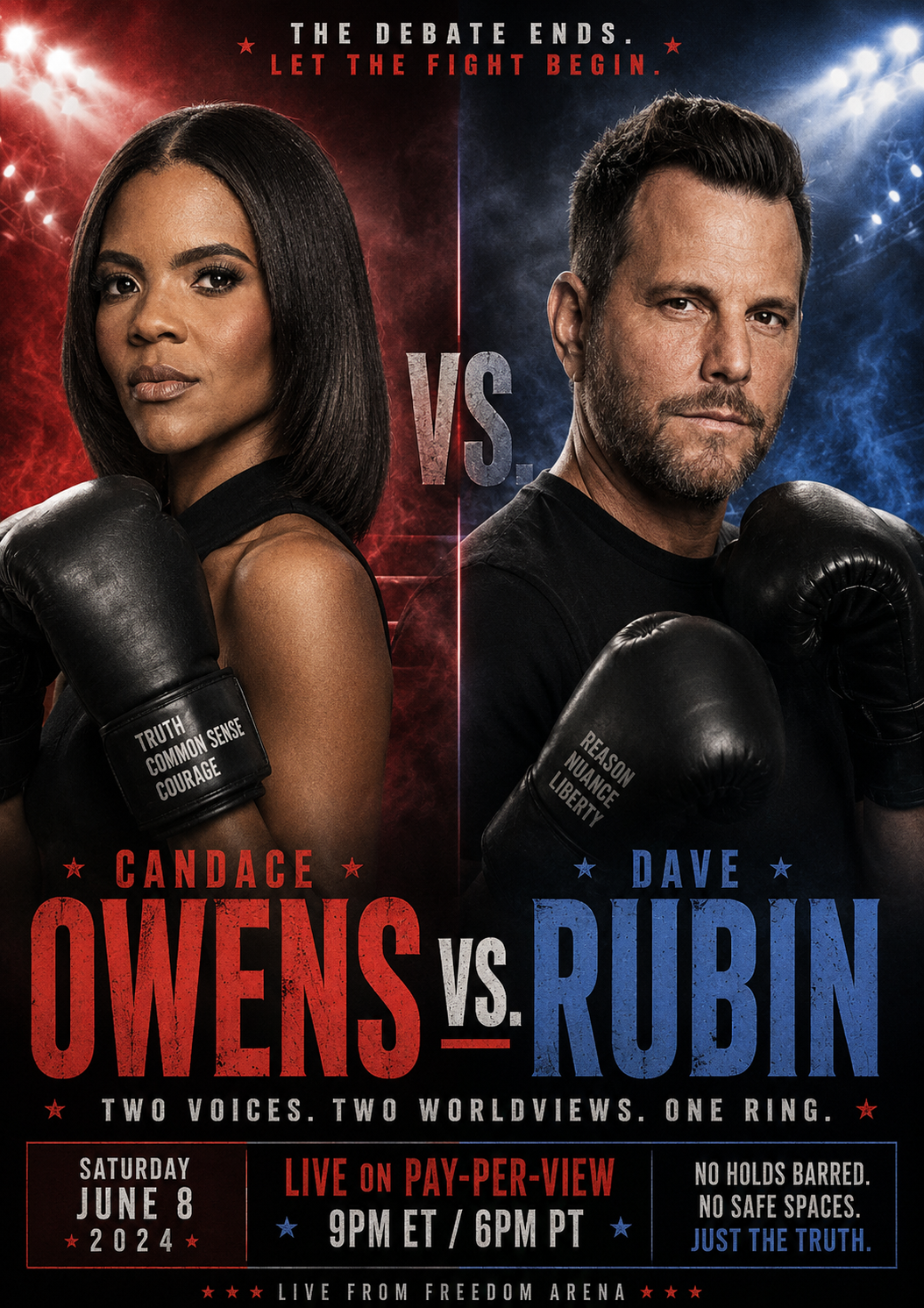
Dave Rubin and Candace Owens went to war publicly in the past couple years — accusations of dishonesty, betrayal, old grievances aired in front of millions. Rubin claimed Owens had spent an hour ranting against Charlie Kirk during a 2022 visit to his home. Owens called it fiction and accused Rubin of lying to protect his pro-Israel position. It was ugly, fast, and predictable to anyone who had been watching both of them for years. And I had.
How Dave Rubin Entered My World
The memoir documents a long journey through the independent media ecosystem — the commentators, podcasters, and thinkers who filled the space mainstream outlets left empty. Rubin was early and significant in that space.
Fox had tapped into the online world for commentary from Steven Crowder’s Louder with Crowder to Dave Rubin’s Rubin Report. They would give Jordan Peterson and Charlie Kirk bigger audiences, among others.
That’s not a small thing. Rubin’s platform was a genuine bridge — a place where the Intellectual Dark Web took shape, where ideas outside the Overton Window got a fair hearing. He described himself as a classic liberal who had been mugged by the left’s new orthodoxy. For a while, that framing worked. He had credibility with people who weren’t reflexively conservative but were watching institutions fail.
The Visit
By the time the Kirk assassination had upended everything in September 2025, relationships that had seemed stable in the independent media world were cracking. The memoir goes there directly:
During our two-week vacation in Florida, I had discussions with three people that would help reorient my return. A sister I hadn’t seen in over ten years talked about the spirituality of it all. A friend from our time in New Mexico and I discussed timelines in the Book of Revelation. And even though I’d left The Rubin Report community, I had kept in touch with one person through X. I used this opportunity to visit his farm and reconcile the changes we’d seen in media, politics, and life.
That visit was real. It mattered. Not because it resolved anything about Rubin’s later public feuds or perceived changes, but because it was a human conversation between two people who had watched the same landscape change from different vantage points.
I had left the Rubin Report community. Not with hostility — with discernment. There’s a difference.
What Discernment Looks Like in Practice
The memoir is built around the question of who to listen to, who to walk away from, and why. Faith is central to that discernment. So is pattern recognition built over a lifetime — as a combat medic, as a father, as someone who has watched institutions reveal their true nature under pressure.
Propaganda is information, but information without discernment becomes manipulation. I’ve learned to rely on the Holy Spirit’s discernment as my guiding heuristic: to choose who I listen to, who I reject, when I peek into opposing viewpoints, and when I step back from voices that seem to exchange authenticity for groupthink, wealth, or deception.
Rubin didn’t fall into the category of voices I rejected with contempt. He fell into the category of voices I stepped back from — men who had done real work and then, under pressure, revealed that their positions were more tribal than they’d advertised.
His public feud with Owens over Charlie Kirk wasn’t a surprise. It was a confirmation.
The Larger Pattern
By early 2026, the memoir records what had happened to the broader landscape:
Commentators drifted off my radar, occasionally resurfacing on X or YouTube: Tim Pool, Steven Crowder, Brandon Tatum, Ben Shapiro, the injured Dennis Prager’s PragerU, the bed-ridden Jordan Peterson, the new direction of Turning Point USA, Alex Jones, NBC, Fox, Glenn Beck, and The Blaze. Disappointingly, the PBD Podcast lost their nuanced curiosity. Corporate conservatism had failed its audience.
Rubin isn’t named in that list. He had already drifted before the list was written. Some departures are loud. Some are quiet. The quiet ones are often more telling.
What I found at that farm in Florida was a person navigating the same grief and disorientation that the Kirk assassination had triggered across the entire landscape. The specific disagreements — Israel, Owens, Kirk’s legacy — were downstream of something deeper: the collapse of trust, the pressure to pick sides, the cost of maintaining independence when everyone around you is choosing a tribe.
I wrote about that. Not to adjudicate who was right in the Rubin-Owens feud, but to witness what it looked like from the outside, in real time, in the life of one Army veteran in Texas who was paying attention.
The full account is in What Was Meant for Harm, available now on Amazon: https://a.co/d/05juIdfJ
Kindle, paperback, and hardcover.
John-Quinn Mulquin Jr. is a U.S. Army veteran, author, and founder of Quinn’s Next Step. He lives in Texas with his wife and son.

